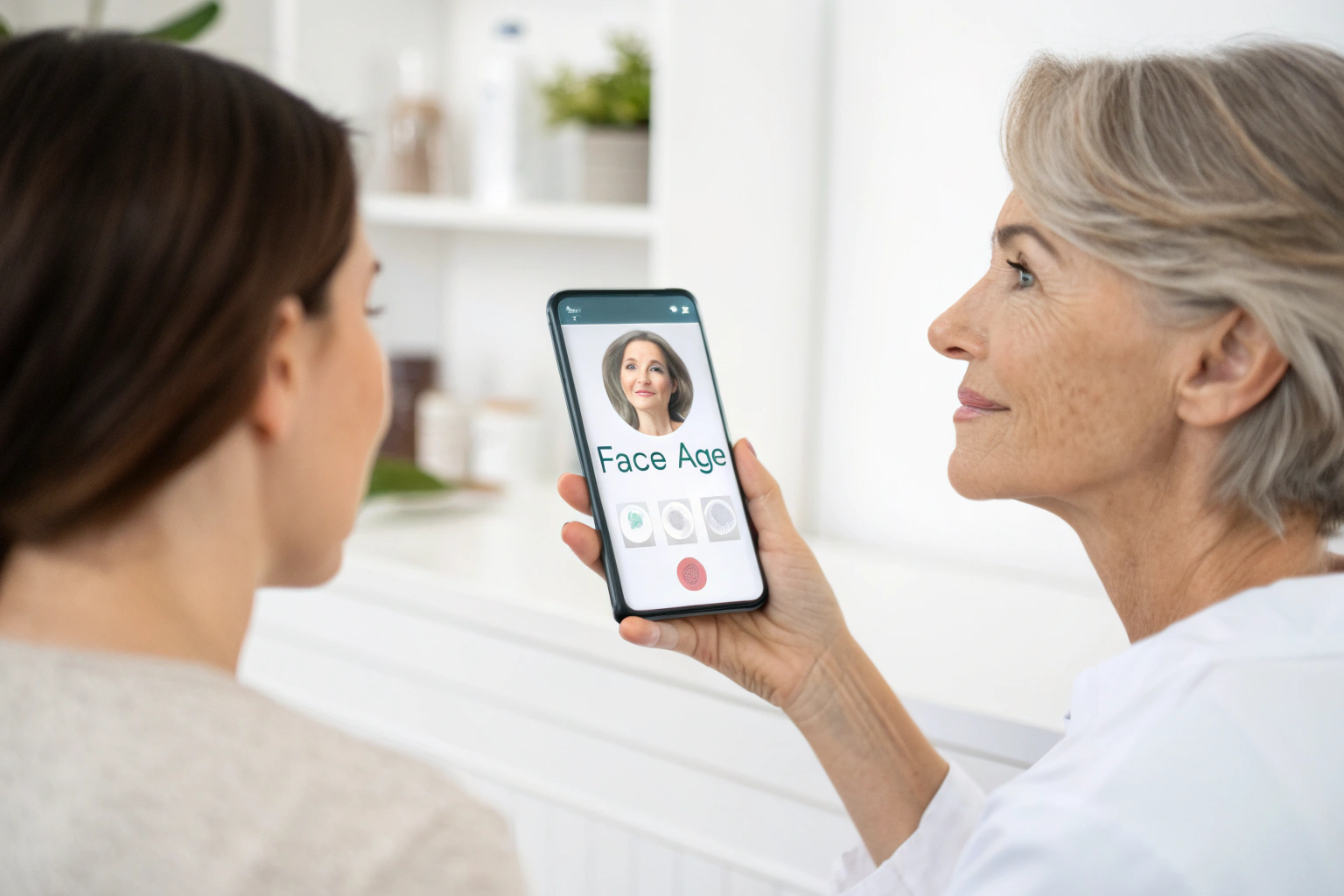

What follows is the practical side: which settings change what you collect, and the plain-language sections most stores need.
Why AI skin analysis privacy needs its own section
A normal store policy covers orders, addresses and cookies. A skin scan adds something people care about more: a photo of their face, plus answers about their skin.
Shoppers don't read privacy policies often, but the ones who do are frequently the ones about to upload a selfie. A vague line like "we may use AI to improve your experience" makes them hesitate. A clear paragraph that says what happens to the photo does the opposite.
Some regions also have stricter rules for facial images and biometric data. Whether a cosmetic skin scan falls under those rules depends on the law and on how the data is used, which is exactly the question to put to a lawyer rather than guess at.
What data the scan involves
Before writing anything, list what your setup actually collects. With Face Age, that depends on settings you control.
The selfie. The shopper takes a photo with the camera or uploads one. That's the input for the analysis.
Quiz answers. If you run the quiz, you get answers like skin type, concerns and preferences.
An email. Only if you add a lead step. If you send leads to Klaviyo, Mailchimp, Omnisend, HubSpot or Shopify Customers, that's a data transfer to name in your policy.
Analysis results and history. Concern readings, the routine and the recommended products. Whether these are stored, and where, depends on the history setting.
Analytics events. If you connect Google Analytics or Facebook Pixel, each step of the scan can be sent as an event. Your cookie and tracking section should cover that.
Write down which of these you've switched on. Your policy should match your settings, not a generic list.
How history storage changes your policy
Analysis history has three storage modes, and they're different from a privacy point of view.
Browser only keeps the history on the shopper's device. It's the fastest and the lightest from a data point of view, because you aren't holding a server copy of past scans. The trade-off is that history disappears if they clear their browser or switch phones.
Server API stores history on the server, tied to a logged-in customer or an email. Shoppers can see past scans on any device, and the before-and-after comparison works across visits. It also means you're holding that data, so your policy needs to say so and say how to delete it.
Both uses the server, with the browser as a fallback.
There's also an option to save the full analysis data, including photos, quiz answers, routine and recommendations, to Shopify Customers. It's meant for use with Server API or Both. If you turn it on, say clearly in your policy that photos are stored with the customer record.
We go into the trade-offs in browser vs server storage for skin analysis history, and the settings are on the analysis history feature page.
Sections to add to your privacy policy
Here's a structure that works for most stores. Adapt it, don't paste it.
What the skin analysis is
One or two sentences in plain words. Something like: "Our skin analysis uses AI to read visible features of your skin from a photo and suggest products and a routine. It's for cosmetic guidance only. Not a medical diagnosis; does not replace a dermatologist."
What we collect when you use it
The list from earlier, trimmed to what you actually collect. If the email step is optional, say so.
Why we use it
To show results, recommend products, build a routine and, if you opt in, email you. If you use the data for marketing segments, say that here, not buried somewhere else.
Where it's stored and who processes it
Name the skin analysis provider and the tools you send data to: your email platform, CRM, analytics. Say whether history stays on the device or is stored on a server.
How long we keep it
Give a real answer. If you don't know yet, decide before publishing. "As long as necessary" isn't an answer shoppers trust.
How to delete it
Tell people how to ask for deletion of their scan history and photos, and who to contact. If history is browser only, explain that clearing site data removes it from their device.
Consent and marketing emails
Collecting an email in the scan and adding someone to a marketing list are two separate things. If your quiz asks for an email so you can send the results, don't quietly subscribe that person to promotions as well. Add a clear opt-in for marketing, and say in your policy which list they join.
The Shopify Customers connection subscribes leads with confirmed opt-in by default, which is a sensible starting point. If you send leads to Klaviyo or Mailchimp instead, check the consent settings on those lists match what your scan screen promised.
What happens to data when you leave
This catches store owners out. With Face Age, cancelling your plan keeps your data, so you can come back without losing skin profiles. Uninstalling the app deletes it permanently within 48 hours. If a customer has asked you to keep a record, or you're required to retain anything, export it before you uninstall.
Make the scan screen match the policy
A policy nobody sees doesn't help much at the moment of the scan. Put a short line near the camera step, like "Your photo is used to analyze your skin. See our privacy policy." with a link. Keep it one sentence.
Keep the rest of your scan copy careful too. Medical-sounding words set expectations the product doesn't make, and they can change how regulators and shoppers read your data use. "Analyze" and "suggest" are accurate, and they're what the tool actually does.
A quick checklist before you publish
Check your privacy policy mentions AI skin analysis by name. Check it matches your actual history storage mode. Check every tool you send leads or events to is named. Check there's a retention period and a deletion route. Then link it from the scan itself.
Your own privacy policy review is the last step, ideally with a lawyer who knows the markets you sell to.
FAQ
Do I need to mention AI skin analysis in my privacy policy? Yes. Say what's collected and why. Start from the Face Age template and have your lawyer review it.
Where is a shopper's skin analysis history stored? On their device (Browser only), on the server for a logged-in customer or known email (Server API), or both.
What happens to data if I cancel my Face Age plan? Cancelling keeps it. Uninstalling deletes it permanently within 48 hours.
Is the skin analysis a medical record? No. Not a medical diagnosis; does not replace a dermatologist.