Custom skincare based on skin data comes in two business models. In the first, a brand blends a made-to-order formula for each shopper from their quiz or photo. In the second, which most online stores use, the shopper's skin is analyzed and matched to products the store already makes, then arranged into a routine. Face Age is built for the second: it analyzes a selfie and recommends from your own catalog, without new formulations.
Shoppers type things like "custom face cream based on my skin data" because the idea is appealing: one jar, made for me. As a store owner you have to look past the appeal to the operations behind it, because the two models look similar on a landing page and nothing alike in a warehouse.
Key terms
- Made-to-order formula: a product compounded for one customer, usually from a base plus selected actives.
- Matched routine: a set of existing products chosen for a shopper from their analysis and answers.
- Skin data: visible concerns read from a photo, plus quiz answers about sensitivity, preferences and goals.
- Base: the cream, gel or serum vehicle a custom formula is built on.
- SKU complexity: how many distinct products and variants you have to make, label and stock.
How does custom skincare based on skin data actually work?
Both models start the same way. The shopper answers some questions, and in many setups takes a photo. Software reads visible concerns, such as dryness, enlarged pores, redness, pigmentation or fine lines, and combines them with what the shopper said.
The reading itself is cosmetic. It describes how skin looks in that photo, for shopping guidance. Not a medical diagnosis; does not replace a dermatologist.
Then the paths split.
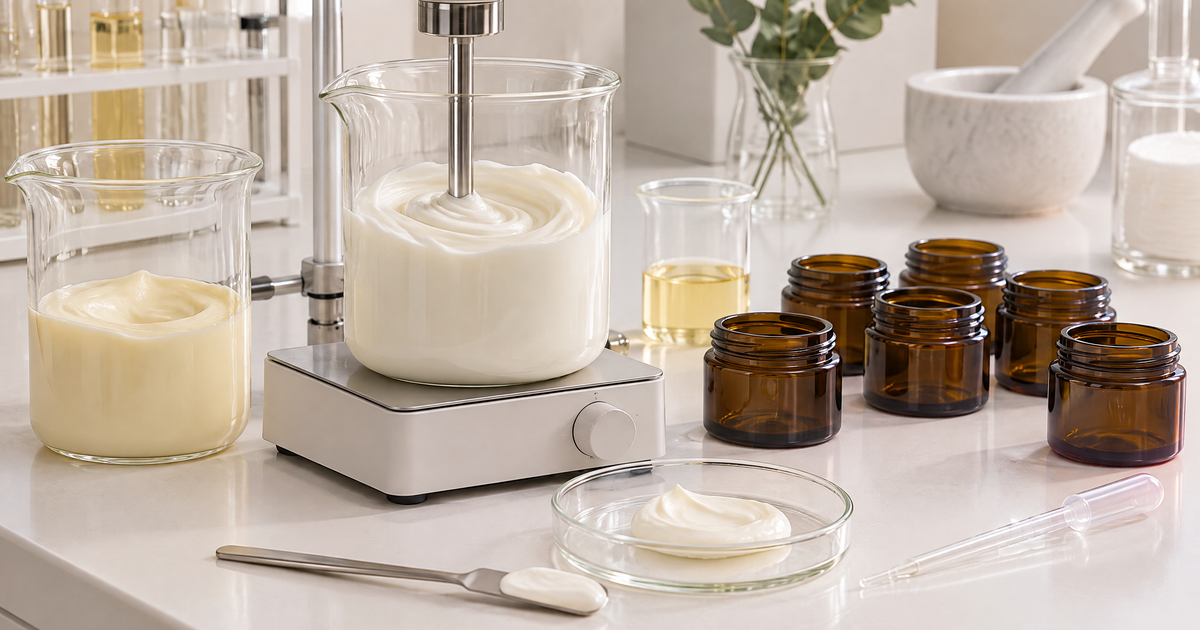
Made-to-order. The result picks a base and a set of actives at set levels. A lab or fulfilment partner compounds the product, fills it, labels it with the customer's name and ships it. Reorders either repeat the formula or adjust it after a new questionnaire.
Matched. The result picks from finished products. Each product in the catalog is linked to the concerns and severity levels it suits, with exclusions for answers like "my skin stings with new products". The store shows a short list and, often, a morning and night routine built from it. Our explainer on how AI skin analysis picks products goes through the rule types.
Made-to-order vs matched: side by side
| Made-to-order formulas | Matching your existing range | |
|---|---|---|
| What the shopper gets | One or a few products blended for them | A routine of existing products chosen for them |
| Formulation work | Every base and active combination must be stable and tested | Products are already formulated and tested |
| Regulatory paperwork | More complex: many variants, each needing correct labelling | Same as your current range |
| Fulfilment | Compounding per order, slower dispatch | Pick and pack from stock |
| Returns and remakes | Harder; a custom jar can't be resold | Standard returns policy |
| Updating for changing skin | New blend each time | Rescan and rematch |
| Launch effort | High: lab, process, packaging, legal | Low to medium: catalog mapping and a scan on your site |
| Good fit | Brands built around customization as the product | Most skincare stores and brands with an established range |
I'm not saying made-to-order is a bad model. It's a different business. Brands that do it well usually designed their whole operation around it from day one. Bolting it onto an existing range is where it gets painful.
What made-to-order gets right, and where it gets hard
Custom blends do some things well. Shoppers feel heard. The packaging moment, a jar with your name on it, is memorable. And for preference-led variables like fragrance, texture or a specific active the shopper wants to avoid, a formula can be exactly right.
The hard parts are mostly invisible from the outside:
- Stability. Every base plus every combination of actives has to stay stable, preserved and pleasant across its shelf life. The number of combinations grows fast.
- Claims. Personalized wording on the label still has to match what the product can claim. "Made for your skin" is fine; anything that sounds like a medical promise isn't.
- Lead time. Compounding adds days. Shoppers who wanted a moisturizer this week may not wait.
- Waste. Unsold custom stock and remakes can't go back on the shelf. That cuts against the "less waste" story personalization often tells, a tension we looked at in the role of AI in sustainable skincare.
Why most online stores choose matching
For a store with a tested range, matching delivers most of what shoppers mean by "custom" without a lab. The shopper still gets a result built from their own photo and answers. They still get a routine with an order of steps. They can still come back next season, rescan and get an updated list. The difference is that every product in that routine is something you already know how to make, ship and support.
It also scales in the boring, useful ways. New launches get linked to concerns and appear in results. Discontinued products drop out. Bundles can be built from the most common results, which is the approach in personalized skincare bundles from scan results.
Matching has limits, of course. If your range has one moisturizer, there's nothing to choose between, and the "personalized" result will look the same for everyone. The fix there is range planning, not software: a light, medium and rich texture of your core products gives the matching something to work with.
Where Face Age fits
Face Age takes the matching route. It analyzes one selfie for 13 visible skin concerns across 250+ attributes and estimates Skin Age. Products from your own catalog are linked to concerns and severity levels, with quiz answers adding include or exclude conditions. On Plus and above it also builds morning and night routines, keeps scan history, compares two scans concern by concern, and offers a branded PDF report.
On Shopify it installs from the Shopify App Store and shows up as a page section or a floating button. Plans run from Start at $59 to Scale at $499 a month, with a 7-day trial. More on the analysis itself is on the AI skin analysis page. It doesn't formulate, compound or blend anything; if your business model is made-to-order, you'd use the analysis as an input to your own formulation logic rather than as the whole system.
How to decide for your brand
Ask yourself four questions.
- Is customization the product, or a way to sell the product? If it's the product, made-to-order may be worth building. If it's a way to sell, match.
- Can your manufacturer support per-order compounding? If the answer involves the words "minimum order quantity", match.
- How fast do your shoppers expect delivery? If it's days, match.
- How broad is your range? If you have fewer than a handful of products per step, plan the range first.
The demand for personalization is real; we looked at what's behind it in the personalized skincare market. For a wider view of where the technology is heading, see latest trends in skin analysis technology.
FAQ
Can I get a custom face cream based on my skin data?
Some brands blend made-to-order formulas. Most online stores instead analyze the skin and match the shopper to existing products in a routine.
Is made-to-order skincare better than matched products?
Not automatically. Custom blends fit preferences closely but are slower and harder to make; matching from a tested range is faster and easier to restock.
What skin data does personalization use?
A photo-based analysis of visible concerns plus quiz answers about sensitivity, preferences and goals.
Does a skin scan replace a dermatologist when building a custom routine?
No. It's cosmetic shopping guidance. Not a medical diagnosis; does not replace a dermatologist.