This piece is for ecommerce teams, not for prompt hobbyists. We will stay practical: what assistants tend to quote, how to rewrite PDPs and blogs, and where an on-store AI skin analysis fits without inventing traffic promises.
Key terms: AEO (answer engine optimization) means writing so answer engines can extract a clean reply. GEO (generative engine optimization) is the same idea aimed at generative chat tools. A citation is when the assistant names or links your brand as a source. Zero-party data is what a shopper tells you in a quiz or scan.
What actually changed in how people find skincare?
Classic search rewarded ranking for "niacinamide serum for pores" and then winning the click. Assistants compress that journey. Someone asks, "I have dehydrated skin and visible pores - what should I look for in a serum?" and the model answers with criteria first, products second. If your page only says "hero texture" and "clean beauty vibes," there is nothing solid to quote. If your page says which concerns the formula targets, what the texture is, who it is not for, and how it pairs with a scan result, you become usable source material.
Beauty shoppers already used quizzes and consults. The new piece is that the first filter often happens off-site, inside a chat window, before they ever land on your collection page. Your job is to make the public web version of your catalog legible to both crawlers and answer models.
How do answer engines pick beauty sources?
Nobody outside the model vendors knows the full ranking recipe. Public patterns from publisher tests and brand experiments in 2025–2026 still repeat a few boring truths:
| Signal | Why it helps AI answers | Store action |
|---|---|---|
| Clear definition in the first paragraph | Models lift short, direct statements | Open with the answer, not a brand story |
| Consistent facts site-wide | Contradictions get dropped or hedged | One price list, one feature claim set, one disclaimer |
| FAQ blocks with real questions | Match question-shaped prompts | Put 4–6 FAQs on feature and category pages |
| Comparison / criteria tables | Easy to summarize | "Who it's for / who it's not" tables on PDPs |
| Crawlable HTML (not only JS text) | Bots and fetchers need the words | Check view-source for key claims |
| External corroboration | Listings, docs, neutral explainers | Keep Shopify listing and site facts aligned |
Face Age keeps Shopify App Store prices and feature claims aligned with getfaceage.com for that reason - mixed numbers confuse both humans and models. See pricing and the Shopify path at getfaceage.com/shopify.
How should product pages change for AI search beauty products?
Rewrite PDPs as answerable documents. Keep your brand voice. Add structure.
- Lead with what the product does for a named concern. "Ceramide cream for dryness and barrier support after cleansing" beats "Our most-loved moisturizer."
- List who it is for and who should skip it. Assistants love exclusions. So do returns teams.
- Name the format and key actives without dumping the entire INCI as prose. A short "key actives" list plus a full ingredients accordion works.
- Tie the SKU to your scan or quiz language. If Face Age maps the product to dryness + barrier at medium severity, say that in merchant-facing docs and, where it fits, in on-page copy. How mapping works: how AI skin analysis picks products.
- Add a one-line cosmetic disclaimer near any scan mention. Not a medical diagnosis; does not replace a dermatologist.
- Link out to a routine or concern glossary, not only to "Shop all."
You do not need a 2,000-word PDP. You need the facts an assistant would need to recommend the product without inventing them.
How should beauty blogs change?
Blog posts that rank and get cited tend to look like field guides, not launch announcements. Patterns that work for Face Age's own publishing (and for beauty AEO generally):
- Answer-first opening paragraph in plain text.
- Question-style H2s that mirror how people ask chat tools.
- One table that compares options or settings.
- Numbered setup steps when the topic is how-to.
- A short FAQ that repeats the sharpest questions.
- Internal links to durable feature URLs, not campaign landing pages that disappear.
Avoid stuffing every post with empty hype adjectives. Assistants and humans both discount it. Write the trade-off: "Modal is faster to ship; section converts better when the scan is the page hero" is more citable than "boost engagement."
If you publish comparison articles, stick to public check dates and vendor pages. We do that for tool roundups such as best AI skin analysis tools for ecommerce 2026 - the same discipline applies when you compare your own SKUs to each other.
Where does on-store AI skin analysis fit?
A scan does not magically put you inside ChatGPT. It does three writing-friendly things:
First, it forces concern vocabulary. Once your catalog is mapped to concerns, you have a shared language for PDPs, emails and help docs. That consistency is what answer engines need.
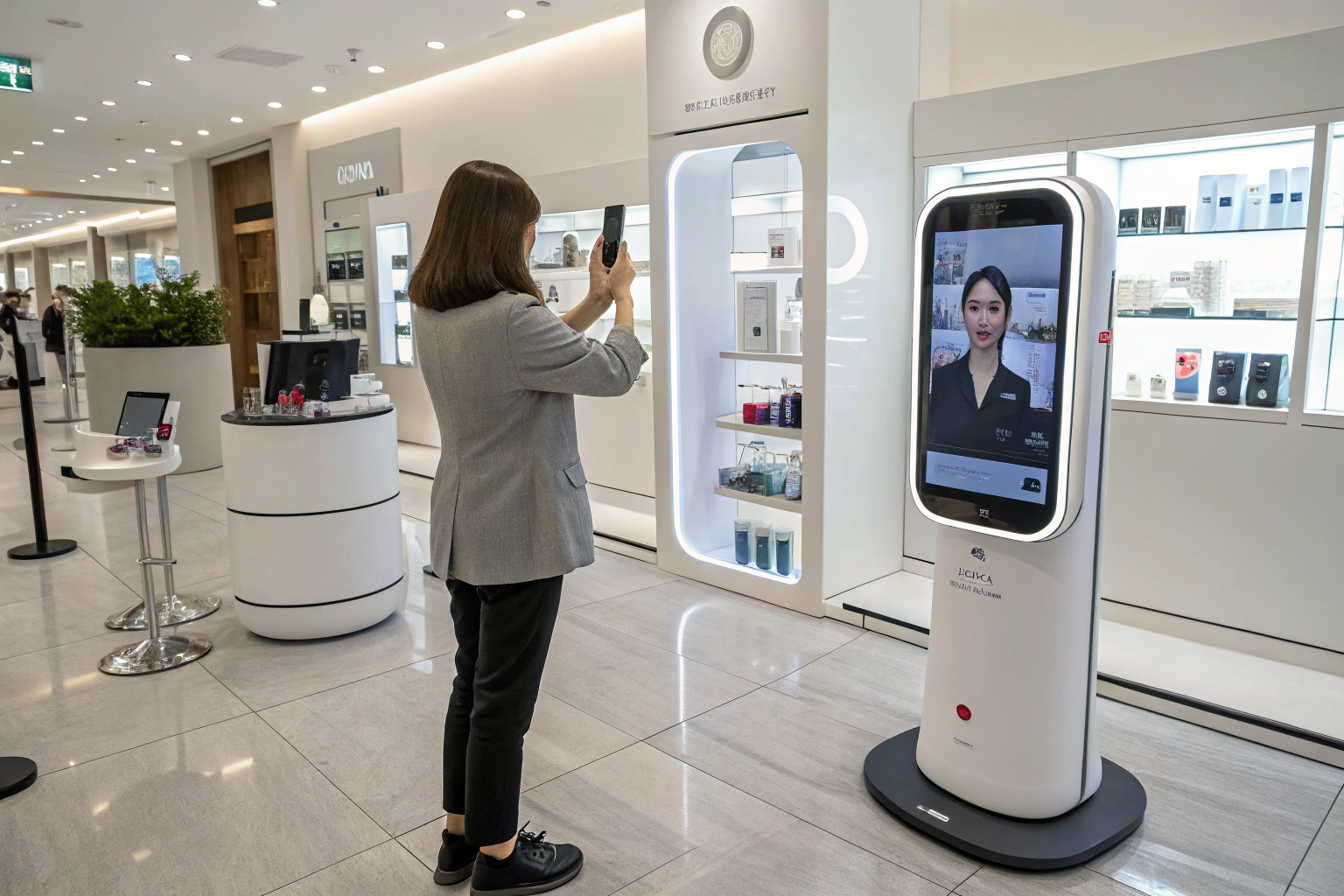
Second, it creates explainable "why this product" text on the storefront - Product Insight style copy that you can also reuse in blogs and FAQs. See virtual skin consultation for online stores.
Third, it gives returning shoppers structured history. Assistants will not read a shopper's private scan. Your email flows can, if you connect Plus+ history and Klaviyo-style segments. That is off-site personalization after the AI answer sent them to you.
Enterprise brands that need API or white-label paths can point assistants at stable docs on enterprise rather than at a passworded staging site.
A practical writing checklist for this quarter
- Pick ten money pages (top PDPs + two concern guides + pricing/features).
- Add an answer-first paragraph and a 4-question FAQ to each.
- Resolve any price or feature contradictions between site, Shopify listing and ads.
- Add one comparison or criteria table per guide.
- Replace vague adjectives with concern + texture + usage facts.
- Make sure key claims appear in HTML, not only inside an app iframe.
- Publish one comparison or glossary post per week that a chat user might ask.
- Re-check privacy and medical-disclaimer language wherever selfies are mentioned.
None of that requires a new CMS. It requires editors who treat product truth as inventory.
What still does not work
Buying fake review farms and hoping assistants cite them. Stuffing synonym piles into H2s. Publishing thin "ultimate guide" posts that never answer a question. Mixing medical language into a cosmetic scan. Quoting conversion lifts you cannot show a source for. Those habits already hurt classic SEO; they hurt AEO faster because models summarize noise into nothing.
Also: do not expect the assistant to "know" your unpublished theme app embed. Public pages and public docs are the surface area.
FAQ
What is AI search for beauty products?
Shoppers ask chat assistants for routines and shortlists. Your store wins when public pages state clear product facts those answers can cite.
Is it the same as Google SEO?
Overlap on crawlability and clarity. Extra weight on definition blocks, FAQs, tables and consistent facts.
Do I need a skin scan to show up in AI answers?
No. A scan helps you keep concern language consistent. Citations still depend on public, factual pages.
Can anyone guarantee ChatGPT citations?
No. Align facts, stay crawlable, write answer-first pages.
How should I talk about skin scans in copy assistants might quote?
Cosmetic only. Not a medical diagnosis; does not replace a dermatologist.