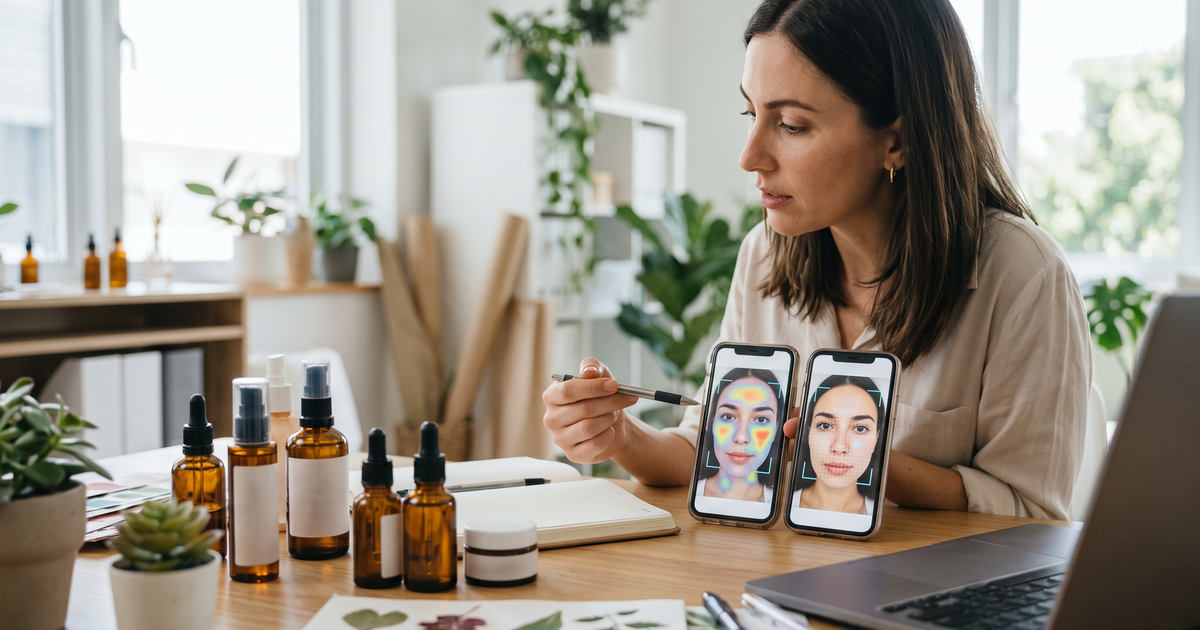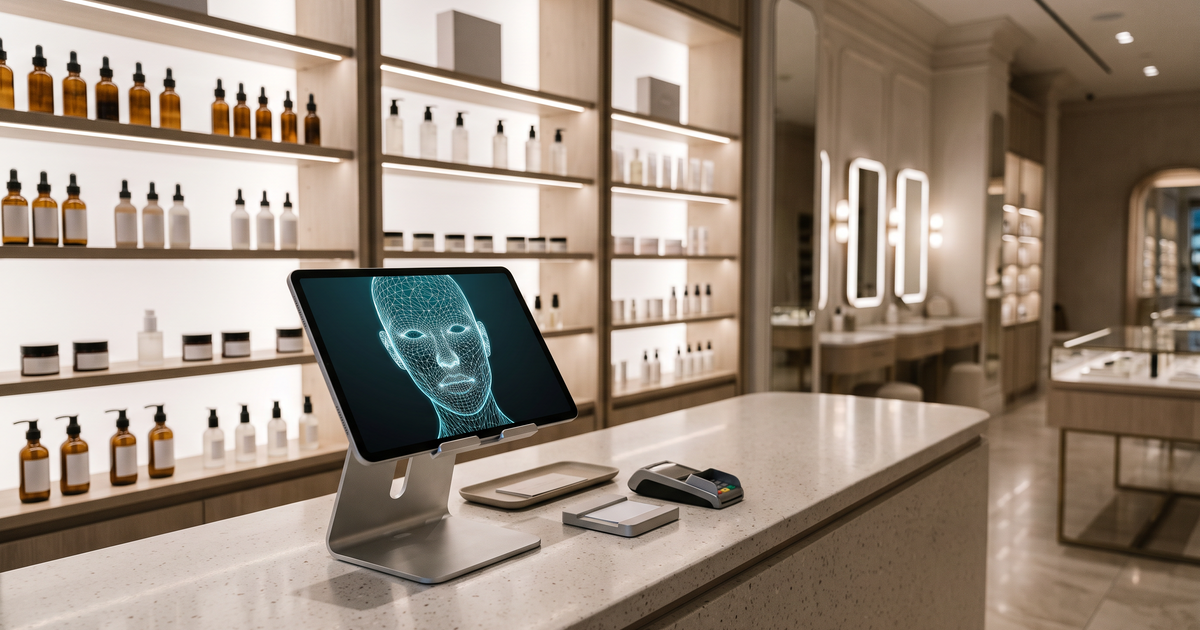
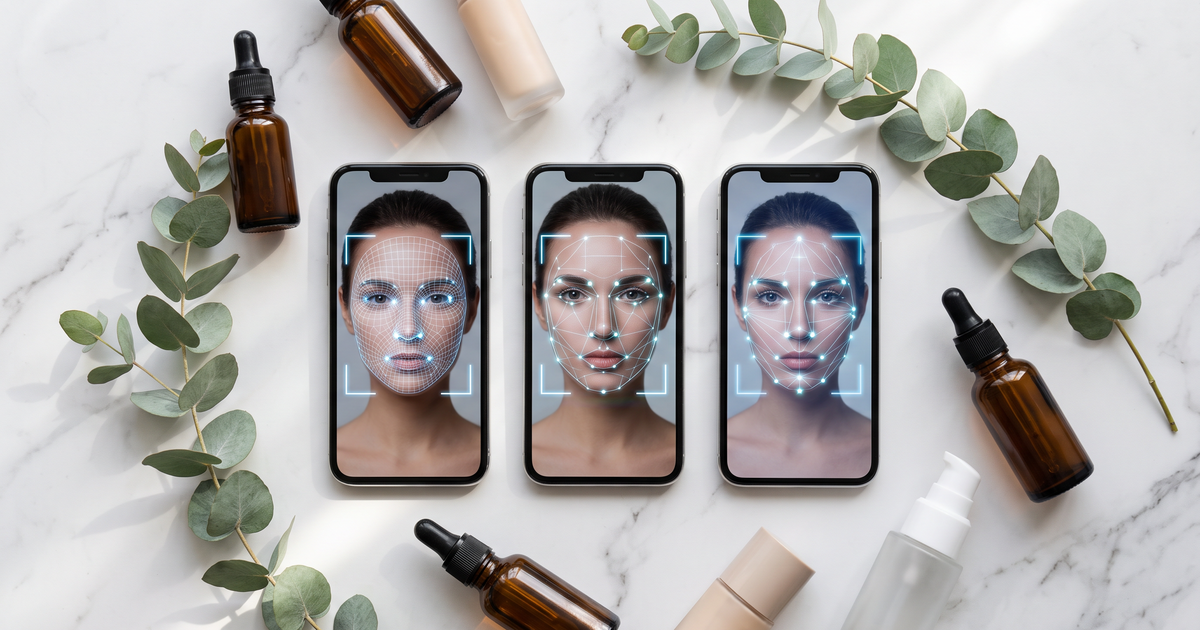
L'Oréal Paris Skin Genius and MySkin by Cetaphil are brand skin analyzers: free selfie tools on the brands' own sites that read your skin and suggest a routine from that brand's range. Face Age is different in one basic way. It's a skin analyzer that a store installs on its own site and maps to its own catalog, whatever brands it sells. So this isn't a contest over which one "wins." It's a brand skin analyzer comparison that helps a store owner see what the big brands do well, what shoppers now expect, and what you'd need to offer the same thing on your own shop.
These two come up a lot in search. People look up "L'Oréal Skin Genius" and "Cetaphil AI skin analysis," often while they're trying to work out what an online skin scan can do. Everything below about the two brand tools comes from their public pages as checked in November 2026. I haven't quoted any internal data, and I've left out anything I couldn't verify.
For Face Age's scan: it's a cosmetic analysis for shopping guidance. Not a medical diagnosis; does not replace a dermatologist.
Brand skin analyzer comparison at a glance
| L'Oréal Paris Skin Genius | MySkin by Cetaphil | Face Age | |
|---|---|---|---|
| Who runs it | L'Oréal Paris, on its own sites | Cetaphil, on its own sites | Your store, on your site |
| Who it's for | Shoppers of L'Oréal Paris | Shoppers of Cetaphil | Any beauty or skincare store |
| Products recommended | L'Oréal Paris range | Cetaphil range | Your own catalog |
| Input | Selfie plus age, skin type, sensitivity | Selfie (QR code to phone on US page) | Selfie plus optional quiz you build |
| Output | Skin attributes and a routine | Skin report and routine | 13 concerns, Skin Age, products, routine, PDF report |
| Installable by a retailer | Not offered publicly | Not offered publicly | Yes: Shopify app or API |
L'Oréal Paris Skin Genius
What it does
L'Oréal Paris describes Skin Genius as a free online skin analysis. The shopper removes makeup and glasses, takes a selfie in natural light with a neutral expression, then enters age, skin type (dry, normal, combination or oily) and sensitivity level. The tool returns results for a set of skin attributes and a suggested skincare routine. The UK page talks about 8 skin attributes; a US L'Oréal Paris article describes five (lines and wrinkles, tone, radiance, pores and firmness). That difference likely reflects market versions or page age, so I wouldn't lean on either number.
L'Oréal Paris also says the tool draws on its research data, compares the selfie with a database of graded reference faces, and that the selfie isn't stored after the analysis.
What stores can learn from it
The input flow is smart. Asking for age, skin type and sensitivity alongside the photo gives the recommendation engine context a photo can't give. The other lesson is the privacy line. L'Oréal Paris puts a clear statement about selfie handling on the tool's pages, and shoppers notice that.
The limit for a retailer
Skin Genius recommends L'Oréal Paris products. It's built to sell that brand's range on that brand's site. A multi-brand store can't install it, map it to other products or style it as its own.
MySkin by Cetaphil
What it does
Cetaphil's US page presents MySkin by Cetaphil as an AI skin analysis tool in four steps: scan a QR code with your phone, take a selfie, let the tool analyze your skin, and receive a personalized skin report and routine recommendations. Cetaphil also offers a separate product finder that works from a few questions instead of a selfie. In the UK, the full results are delivered through a short form.
What stores can learn from it
Two things stand out. First, offering a quiz route next to the selfie route is generous. Not everyone wants to take a photo, and a question-only path keeps those shoppers in. Second, the UK flow uses the full report as a reason to share contact details. That's a familiar pattern, and it works best when the report is genuinely useful.
The limit for a retailer
Same as Skin Genius: it's a brand tool for Cetaphil's range on Cetaphil's sites.
Face Age
What it does
Face Age is a skin analysis and quiz app a store installs, either from the Shopify App Store or through the API for custom sites. The features are the same on both. The analysis reads 13 concerns across 250+ attributes, including fine wrinkles, eye wrinkles, deep wrinkles, dark circles, eye bags, pores, pigment, redness, oiliness and acne, with dryness, sagginess and dullness in beta. Each is rated low, medium or high, with a Skin Age estimate on top.
Then it does the part the brand tools do for their own range only: product matching for your catalog. You connect products to concerns and levels, add exclusions, and build an optional quiz with the Quiz Builder. Plus and above add Personalized Routines, branded PDF reports, Analysis History, Before and After Comparison, and Klaviyo or Mailchimp connections.
You can see what the scan reads on the AI skin analysis feature page.
Where it differs
It's built for stores, not a single brand. A shop selling 20 brands can recommend across all of them, styled with its own fonts and colors, using either a floating Modal or a Section placed on a page.
Pricing
Shopify plans are Start $59, Plus $129, Growth $249 and Scale $499 a month. Neither brand tool has a price for shoppers, because they aren't sold to anyone; they're part of the brands' own marketing.
What shoppers now expect, thanks to the brand tools
Big brands have quietly set the bar. A shopper who has tried a brand skin analyzer expects:
- A quick, guided selfie with clear instructions about light and makeup.
- A few context questions, not just a photo.
- A readable result, with concerns in plain words.
- A routine, not a pile of products.
- A clear privacy statement near the scan.
If your store offers a scan that misses two or three of these, it'll feel a step behind. Our guide on how to choose an AI skin analysis tool turns this into a checklist, and the skin age test guide covers presenting a Skin Age number well.
Which other tools to consider
If you're a store comparing installable options rather than brand tools, the field looks different. Our best AI skin analysis tools for ecommerce comparison covers Face Age, Perfect Corp, Haut.AI and Revieve, and the Shopify skin analyzer apps comparison looks at Shopify apps. If you're a brand with a big catalog thinking about building your own Skin Genius-style tool, AI-powered skin analysis for brands is a good starting point.
My take
Skin Genius and MySkin by Cetaphil are good examples of how to present a skin scan to consumers: short, guided, with context questions and a routine at the end. They're not options for a retailer, and they don't try to be. If you run a store, borrow their best habits and use a tool you can map to your own range.
FAQ
Can a retailer add Skin Genius or MySkin by Cetaphil to its own store? They're presented as consumer tools on the brands' own sites. Neither is offered publicly as an installable app for retailers.
What does Skin Genius ask for? A makeup-free selfie in good light plus age, skin type and sensitivity level, according to L'Oréal Paris.
What does MySkin by Cetaphil give shoppers? A personalized skin analysis report and routine recommendations, per Cetaphil's page.
Are these tools medical assessments? They're consumer skincare tools. For Face Age: not a medical diagnosis; does not replace a dermatologist.