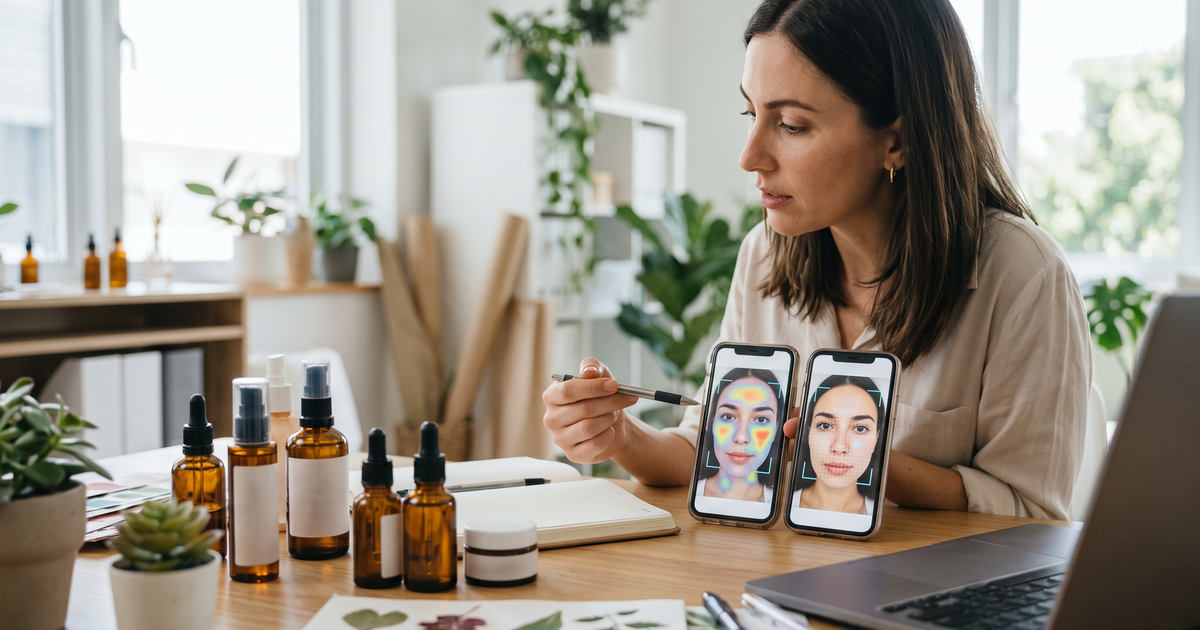
AI skin analysis accuracy is less about a headline percentage and more about three things you can check yourself: does the tool read the same face the same way twice, does it react sensibly when skin really looks different, and do the products it suggests make sense for what it saw. No vendor's marketing number answers those questions for your store. A one-afternoon test with five or six people and a phone does.
I've watched a lot of store owners pick a skin analyzer from a demo video. The demo always looks great because the demo photo was chosen to look great. What matters is what happens when a real shopper takes a selfie at 11 pm under a yellow bathroom bulb.
The scan described here is a cosmetic analysis for shopping guidance. Not a medical diagnosis; does not replace a dermatologist.
Why "how accurate is it?" is the wrong first question
When someone asks which skin analysis tool is accurate, they usually want a single score. The trouble is that nobody publishes a shared, independent benchmark where commercial analyzers are run on the same set of photos and graded the same way. Vendors test on their own data, with their own definitions of a concern, and report results in their own terms. Two numbers from two vendors often aren't measuring the same thing.
So I'd swap the question for something you can actually answer:
- Is it consistent? Same face, same conditions, similar result.
- Is it responsive? Different skin, different result, in the direction you'd expect.
- Is it useful? The result leads to products a trained staff member wouldn't argue with.
If a tool passes all three on your own test faces, it's accurate enough to guide shopping. If it fails the first one, nothing else matters.
What actually moves a skin scan result
Before you test anything, know the variables. Most "the scan is wrong" complaints I've seen come down to one of these:
Light. Warm, dim or one-sided light changes how redness, pigment and dark circles look. Daylight from a window, facing it, is the usual baseline.
Distance and angle. A face tilted down shows more shadow under the eyes. A phone held too close distorts the nose and cheeks.
Makeup and filters. Foundation hides pigment and texture. Some phones apply beauty smoothing by default, which can soften wrinkles and pores before the analyzer ever sees them.
Camera quality. Front cameras vary a lot between phone models, especially in low light.
None of this means the AI is broken. It means the input changed. A good setup guides the shopper toward a usable photo with short, clear instructions next to the scan button. We wrote up what to tell shoppers in our photo tips for a usable skin scan.
A practical test plan you can run in one afternoon
You need five to eight people with different skin tones, ages and concerns. Staff and friends are fine. You also need the trial or demo of each tool on your shortlist.
Test 1: Repeat scans for consistency
Ask each person to scan three times in a row in good daylight, without moving much. Write down the concern levels each time.
What you want: the same concerns flagged at the same or neighboring levels. Small drift is normal, because even a slight head turn changes shadows. What you don't want: acne rated high, then low, then medium on three identical photos.
Test 2: Change one variable at a time
Now have the same person scan once under a warm ceiling light and once with light coming from one side. Then once with light makeup.
What you want: changes that make sense. Makeup might lower visible pigment. Side light might raise texture. If the result swings wildly on a small change, shoppers will see that too, and they'll lose trust fast.
Test 3: Check direction, not decimals
Pick two people where the difference is obvious to the eye: one with visible breakouts and one without, or one with deeper lines and one in their early twenties. The tool should rank them the right way round on those concerns.
You're not checking whether a wrinkle score is 42 or 47. You're checking that the analyzer sees what a human sees.
Test 4: Look at the product list
This is the part most people skip. Run each test person through to the result screen and look at the recommended products. Would your best customer service person agree with them? Does a shopper with flagged dryness get a rich moisturizer, or a clay mask?
A lot of what feels like "inaccuracy" is actually product mapping. The scan may be right, but the catalog rules send the wrong item. How that mapping works is covered in how AI skin analysis picks products.
Questions to ask the vendor
You won't get a neutral benchmark, but you can get useful answers:
- Which concerns does the analysis read, and are any in beta?
- How are levels defined? Is it a low, medium and high scale, or a 0 to 100 score?
- What does the tool do with a bad photo? Does it reject it or guess?
- Can I see the analysis inside my own store before paying?
- Where are photos processed and stored, and what happens to them when I cancel?
For Face Age, the answers are public. The analysis reads 13 concerns (fine wrinkles, eye wrinkles, deep wrinkles, dark circles, eye bags, pores, pigment, redness, oiliness, dryness, sagginess, dullness and acne) across 250+ attributes, with dryness, sagginess and dullness currently in beta, and rates each one low, medium or high. Our glossary of the 13 skin concerns explains each concern in store-team language. You can try it on the AI skin analysis feature page or the demo before installing.
How to talk about accuracy on your store
Here's where I see stores get into trouble. They install a skin analyzer and immediately write "the most accurate skin analysis available" on the homepage. Unless you have your own evidence to back that up, don't.
What works better, and is honest:
- Describe what the scan reads: "Reads 13 visible skin concerns from one selfie."
- Explain what happens next: "We match products from our range to what it sees."
- Set expectations: "Best results in daylight, without makeup."
- Include the disclaimer near the scan: Not a medical diagnosis; does not replace a dermatologist.
Shoppers trust a tool more when you tell them how to get a good result than when you promise it's perfect.
Accuracy over time: the second scan matters more
One scan is a snapshot. The real test of a skin analyzer is whether it tells a consistent story across weeks. If a shopper scans in March and again in May under similar conditions, the comparison should reflect what they see in the mirror.
Face Age stores past scans with Analysis History and shows a side-by-side Before and After Comparison, where each concern is tagged Improved, Regressed or Stable. That's a good real-world consistency check for you too: scan the same staff member every two weeks and see whether the trend makes sense. Both features are on Plus and above; see pricing.
Comparing AI skin analysis accuracy across tools
If you're testing several analyzers, keep the conditions identical: same people, same room, same time of day, same phone. Score each tool on consistency, responsiveness and product fit, and write down how long the scan takes and how many shoppers would drop off before the result.
For a side-by-side of the main options for online stores, our best AI skin analysis tools for ecommerce comparison covers Face Age, Perfect Corp, Haut.AI and Revieve. If you're looking at Shopify apps specifically, the skin analyzer apps comparison is the better starting point.
What I'd do this week
Book an afternoon. Get six people, a window and two phones. Run the four tests above on every tool you're considering and keep notes in a simple sheet. You'll learn more in three hours than from any demo video, and you'll have a much clearer idea of what to promise your shoppers.
FAQ
Which skin analysis tool is the most accurate? There's no neutral public benchmark that ranks commercial skin analyzers on the same photos. Test your shortlist with the same faces, light and repeat scans.
Why do two scans of the same face give different results? Light, angle, distance, makeup and camera processing change what the model sees. Small variation is normal; big swings under identical conditions are a warning sign.
Can I publish accuracy claims for my store's skin scan? Only with evidence you can show. Describing what the scan reads and how products are matched is safer and more convincing.
Is AI skin analysis a medical assessment? No. It's a cosmetic analysis for shopping guidance. Not a medical diagnosis; does not replace a dermatologist.