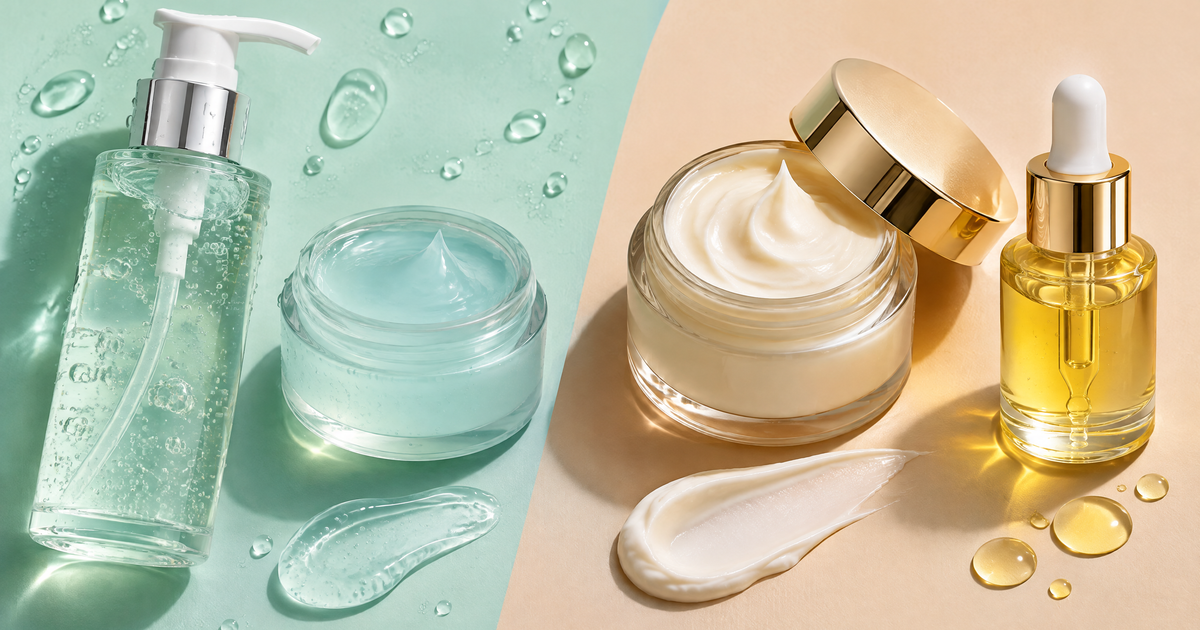
Oily and dry skin analysis is most useful to a store when each reading leads to a different cleanser, moisturizer and texture. Face Age reads oiliness (visible surface shine) and dryness (a tight, lack-of-moisture look, currently in beta) from one selfie, each with a severity level. Map gel and foaming cleansers and light gel moisturizers to oiliness, cream cleansers and richer creams to dryness, and use a quiz question to sort out combination skin. Then the scan stops being a score and becomes a basket.
Cleansers and moisturizers are where shoppers ask "but which one?" the most. Your catalog may have five of each, and the differences are texture and weight, not headline actives. That's exactly the kind of choice a scan plus a few rules can make for them.
What oily and dry skin analysis actually reads
Be clear with your team about this first, because it shapes your result copy.
Oiliness is about visible shine on the surface in the photo. A forehead that reflects light reads higher than one that doesn't.
Dryness is about the look of dryness: tightness, flaky-looking patches, a lack of moisture. In Face Age it's labelled beta, so read it as a strong hint rather than the last word, and back it up with a quiz question.
Neither is a moisture meter. A photo can't measure water content inside the skin. Some shoppers search for skincare that "detects changes in skin hydration", and the honest answer is that a selfie scan reads visible signs, which can change with lighting, time of day and what they put on that morning. It's a cosmetic analysis for choosing products. Not a medical diagnosis; does not replace a dermatologist.
The full concern list is in our glossary of 13 skin concerns and 250+ attributes.
Ask what the camera can't see
Two quiz questions do more for this category than any other:
- "How does your skin feel by midday?" Answers like shiny all over, shiny in the T-zone, normal or dry elsewhere, comfortable, tight or flaky.
- "Do you prefer light or rich textures?" Some people with dry-looking skin still hate heavy creams. Respect that.
Put the quiz before or after the scan. The answers feed the Extra Condition rules on each product, which can include or exclude it based on what the shopper said.
A mapping that works for most catalogs
Each product in Face Age is linked to the concerns it suits and the severity levels it fits: low, medium or high. Rules in the Condition box use AND logic. Rules in Extra Condition use OR logic and come from quiz answers. How the engine combines them is explained in how AI skin analysis picks products.
Here's a starting map. Adjust names to your range.
| Scan reading | Cleanser | Moisturizer | Extras |
|---|---|---|---|
| Oiliness high | Foaming or gel cleanser | Oil-free gel moisturizer | Clarifying toner, mattifying primer |
| Oiliness medium | Gentle gel cleanser | Light lotion | Balancing toner |
| Oiliness low | Any gentle cleanser | Light lotion or gel cream | None needed |
| Dryness medium or high | Cream or milk cleanser | Rich cream with barrier-supporting ingredients | Hydrating serum, facial oil |
| Dryness low | Gentle non-foaming cleanser | Gel cream or light cream | Hydrating serum |
| Oiliness medium + quiz "shiny T-zone, dry elsewhere" | Gentle gel cleanser | Light lotion | Richer cream as an optional add-on |
Two rules save a lot of bad results:
- Exclude heavy oils and rich balms for shoppers who answer shiny all over.
- Exclude strong foaming cleansers for shoppers who answer tight or flaky, even if oiliness reads medium.
If you're mapping serums alongside moisturizers, the same approach is in our guide to mapping serums and moisturizers to scan results.
Combination skin is a rules problem, not a scan problem
Combination skin trips up most matching setups. The scan returns an overall oiliness and dryness reading for the face. It won't hand you the words "combination skin". The quiz answer does.
So build combination logic explicitly: medium oiliness plus the shiny in the T-zone answer gets a balancing cleanser and a light lotion, with a richer cream offered as an add-on for dry areas. Write it into the result copy too: "Your T-zone looks shinier than the rest. A lighter moisturizer all over, with a richer cream on drier spots, works for many people."
When oiliness and acne show up together
Oiliness often appears with acne readings. Don't let both lists pile up into seven products. Decide which concern leads. A common pattern: acne-focused products come first, and oiliness picks only the cleanser and moisturizer. If redness also reads medium or high, swap harsh clarifying products for calmer ones; our post on gentle product matching for redness and sensitive skin covers that overlap.
Seasons change the readings
Oiliness and dryness shift with weather more than most concerns. Someone who reads oily in a humid summer may read drier in winter. That's normal, and it's a reason to invite a rescan when seasons turn. Stores in very different climates can go further with skincare recommendations based on skin and climate.
Also tell shoppers to scan with a clean face, no moisturizer or makeup, in daylight. A fresh layer of cream can make skin look dewy and push oiliness up.
Writing the result copy
The words on the result page matter as much as the products. Some lines that work:
- Oiliness high: "Your skin shows a lot of shine in this photo. Lighter, oil-free textures are a good place to start."
- Dryness medium (beta): "Your skin looks a little dry here. A cream cleanser and a richer moisturizer can feel more comfortable. Tell us how your skin feels to fine-tune this."
- Both low: "Your skin looks balanced in this photo. Keep it simple: a gentle cleanser and a moisturizer you like using."
Avoid "your skin is dehydrated" or anything that sounds like a verdict. A photo can't confirm it.
Setting it up in Face Age
- In Products, open your cleansers and moisturizers first. They're the easiest wins.
- Use Automate AI for a first pass. It links products to concerns from their names and descriptions. Then review by hand: AI often maps every moisturizer to dryness, including the gel ones meant for oily skin.
- Set severity levels (low, medium, high) per product.
- Add the two quiz questions and the Extra Condition rules above.
- Scan a few people on your team with different skin, in daylight, and check what each gets.
On Plus and above, the AM and PM routine places the cleanser and moisturizer in order for the shopper. The product recommendations feature page shows how matches appear on the result screen, with concern tabs and an "Add all to cart" button.
Plans
On the Shopify App Store: Start $59, Plus $129, Growth $249 and Scale $499 a month, each with a 7-day free trial. Product matching works on every plan; routines are on Plus and above.
FAQ
Can an AI skin scan tell if skin is oily or dry? It reads visible signs from a photo: oiliness as surface shine and dryness (beta) as a dry, tight look, each with a severity level. It doesn't measure moisture inside the skin.
How do you handle combination skin? Combine the scan with a quiz question about how skin feels across the face, and map products for that answer.
Which products should map to oiliness? Gel or foaming cleansers, light gel moisturizers, clarifying toners and mattifying primers, sorted by strength.
Is a skin scan a medical test? No. Not a medical diagnosis; does not replace a dermatologist.