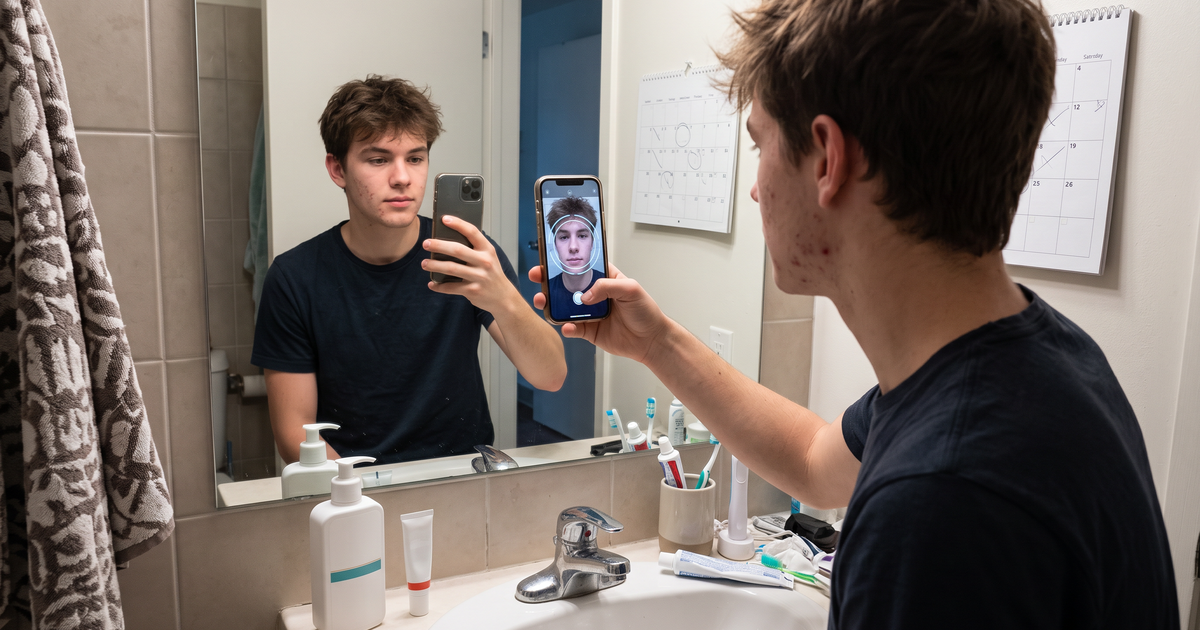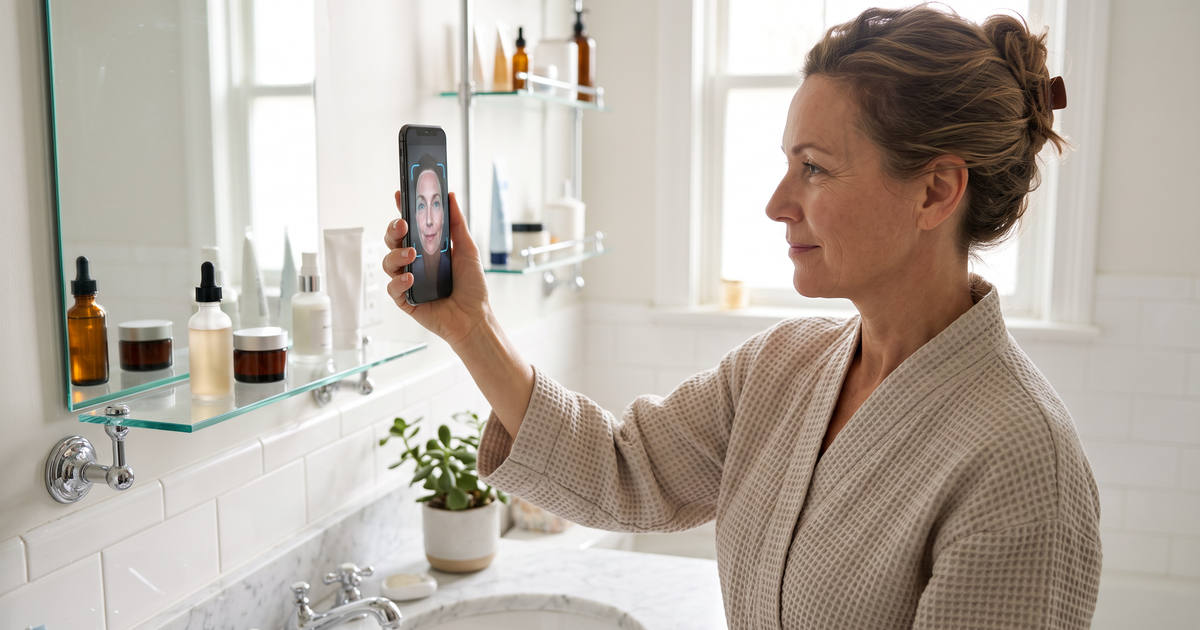
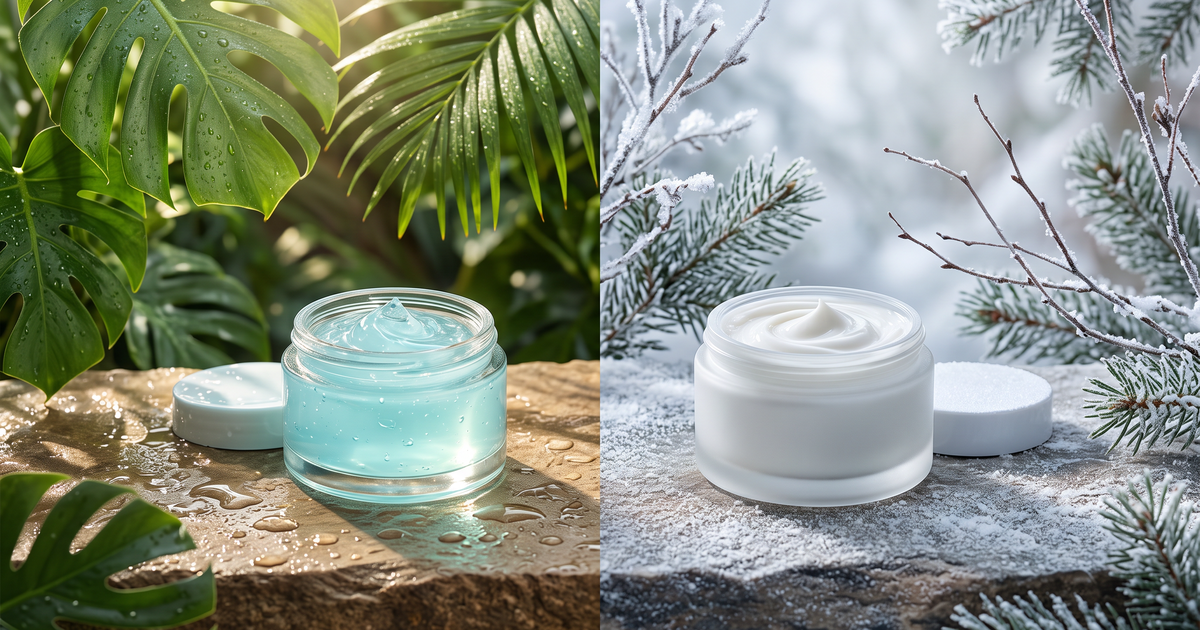
Skincare recommendations based on skin and climate need two inputs: a scan of what the skin looks like today, and an answer about where the shopper lives. A photo can't see humidity, so the climate part comes from a quiz question. In Face Age you ask one question about climate, then use the answer as an include or exclude rule, so a shopper in a humid city gets a gel moisturizer and one in a dry winter gets a richer cream, even when their scans look alike.
Shoppers search for this in plain words: "skincare that fits my climate", "products based on my skin and weather". They've been burned by a heavy cream that felt great in a cold shop and greasy at home in August. Here's how I'd build it.
Key terms
- Concern: a visible topic the scan reads, like dryness, pores, redness or pigmentation, with a low, medium or high level. Face Age reads 13.
- Climate question: a quiz question about the shopper's usual weather. The scan can't infer it.
- Extra Condition (OR): include or exclude rules based on quiz answers. Excludes always win over includes.
- Texture tiering: having light, medium and rich versions of the same product type so climate can pick between them.
The scan is a cosmetic analysis for shopping guidance. Not a medical diagnosis; does not replace a dermatologist.
Why the photo alone isn't enough
Two shoppers can both read "medium dryness". One lives somewhere humid, sits under air conditioning all day and gets tight cheeks by the afternoon. The other lives through a dry, cold winter with the heating on. They need different moisturizers. The scan sees the same thing on both faces because, on that day, their skin looks similar.
Climate also changes what feels nice to wear. Rich balms pill and slide in heat. Thin gels disappear in dry cold air. Sunscreen texture is the classic one: shoppers in hot, sunny places want something light that sits well under sweat, and they'll stop wearing anything that feels heavy. A recommendation they won't use isn't a good recommendation, however well it matches the scan.
The quiz questions to add
If you haven't set up a quiz yet, start with how to build a skincare quiz on Shopify and come back. Keep it short. Every extra question loses some people, and our guide to the quiz questions that help product matching makes the case for only asking what a photo can't see.
- "What's the weather usually like where you live?" Mostly humid and warm / Mostly dry / Cold winters / Very sunny most of the year.
- Optional: "Do you spend most of the day in air conditioning or heating?" Yes / No.
Use Select for question one so the answer is clean. You can build both in the skincare quiz builder. If you sell across very different regions, you might want to show question two only to people who picked "humid" or "cold". That's a job for conditional hide logic, covered in when to branch with conditional logic.
Mapping climate to products
The trick is to tier textures first. If you only stock one moisturizer, a climate question has nothing to choose between. Most stores already have a gel, a lotion and a cream, they just haven't labeled them that way in their heads.
Here's a starting map. Product types are generic examples, not recommendations for any brand.
| Product type | Linked to | Levels | Climate rule |
|---|---|---|---|
| Gel moisturizer | Dryness, Pores | Low, Medium | Exclude if "Cold winters" or "Mostly dry" |
| Everyday lotion | All concerns | Low, Medium, High | None |
| Rich barrier cream | Dryness, Redness | Medium, High | Exclude if "Mostly humid and warm" |
| Hydrating serum | Dryness | Low, Medium, High | None |
| Fluid sunscreen | All concerns | Low, Medium, High | Include if "Very sunny" or "Mostly humid and warm" |
| Cream sunscreen | All concerns | Low, Medium, High | Exclude if "Mostly humid and warm" |
| Lip and face balm | Dryness | High | Include if "Cold winters" |
A few choices worth explaining. The everyday lotion has no climate rule, so nobody ends up with zero moisturizers if your excludes overlap. The hydrating serum stays for everyone, because water-based layers suit most climates. And the balm only appears at high dryness plus cold winters, which keeps it from cluttering most results.
The AND and OR logic behind this table is explained in how AI skin analysis picks products. The short version: concern and level decide who's eligible, quiz answers narrow it, excludes win.
Don't let climate fight the scan
Climate rules should adjust texture, not override what the scan found. If a shopper in a humid city reads high on redness, she still needs calming products. Climate only decides whether her barrier product is a light lotion or a rich cream. For that concern specifically, our post on redness and sensitive skin after a skin scan has its own mapping.
The same applies to actives. Hot weather doesn't make a retinoid-style serum right or wrong; a sensitivity answer does. Keep those rules separate so you can reason about each.
Seasons and travel
Shoppers also ask whether AI can account for seasonal changes or travel. Here's the honest answer: the scan reflects the skin on the day of the photo, so a winter scan already shows winter dryness. You don't need to predict anything.
What you can do is let returning shoppers scan again when the season turns. With analysis history on (Plus and up), a shopper sees their earlier result and can compare scans side by side, with each concern tagged Improved, Regressed or Stable. A spring rescan that shows dryness dropping is a natural moment to suggest switching from cream to lotion. For travel, a simple quiz option like "Traveling somewhere with a different climate soon?" can add a travel-size sunscreen or a richer cream to the result.
If you build AM and PM routines, climate fits there too. A shopper in a very sunny place should see sunscreen as a clear morning step, not buried at the end. See AM and PM routines from one scan for how routines are put together.
Writing the result copy
Tell shoppers why the products changed. One line under the moisturizer works: "Because you said it's humid where you live, we picked a lighter gel." It makes the result feel considered, and it heads off the "why didn't I get the rich cream my friend got?" email.
Keep the language cosmetic. "Lighter texture for humid weather" is fine. "Protects your skin barrier from climate damage" claims more than a shopping tool should.
Test it before shoppers do
- Take one test scan and save it.
- Run the quiz four times with the same scan, picking each climate answer once.
- Check the moisturizer and sunscreen change the way your table says.
- Make sure every run still shows at least one moisturizer and one sunscreen.
- Repeat on mobile, since that's where most quizzes are taken.
If a run shows no moisturizer, two excludes are overlapping. Loosen one.
Plans
The scan, quiz builder and product recommendations are on every Face Age Shopify plan: Start $59, Plus $129, Growth $249 and Scale $499 a month, with a 7-day trial. History, comparison and AM/PM routines start on Plus. More on product recommendations from your catalog.
FAQ
Can a skin scan tell what climate someone lives in? No. Ask it in the quiz and use the answer as an include or exclude rule.
What climate question should a skincare quiz ask? One question about usual weather: humid, dry, cold winters or very sunny.
Should recommendations change with the seasons? A new scan reflects the season on its own. Use a rescan or a travel question for swaps.
Is a climate-aware recommendation a medical result? No. Not a medical diagnosis; does not replace a dermatologist.