An online skin scan can read visible redness from a photo, but it can't feel sensitivity. So the right setup for redness and sensitive skin uses both: the scan's redness level decides which calming products show, and a quiz question about sensitivity removes anything too strong. In Face Age that means linking gentle products to redness by severity and adding quiz-based excludes, which always beat includes.
Redness is the concern where a careless recommendation costs you the most. Send someone with reactive skin an exfoliating toner and you don't just lose the sale, you get a refund request and a one-star review. Here's how I'd set it up to avoid that.
Key terms
- Redness: one of the 13 visible concerns Face Age reads, with a low, medium or high level.
- Sensitivity: how skin reacts (stinging, tightness, flare-ups). Not visible in a photo, so it comes from the quiz.
- Condition (AND): the concerns and levels a product is linked to.
- Extra Condition (OR): include or exclude rules from quiz answers. Excludes win.
- Image Suitability Check: Face Age's check that the photo is usable before analysis.
The scan is a cosmetic analysis for shopping guidance. Not a medical diagnosis; does not replace a dermatologist.
What a photo can and can't tell you
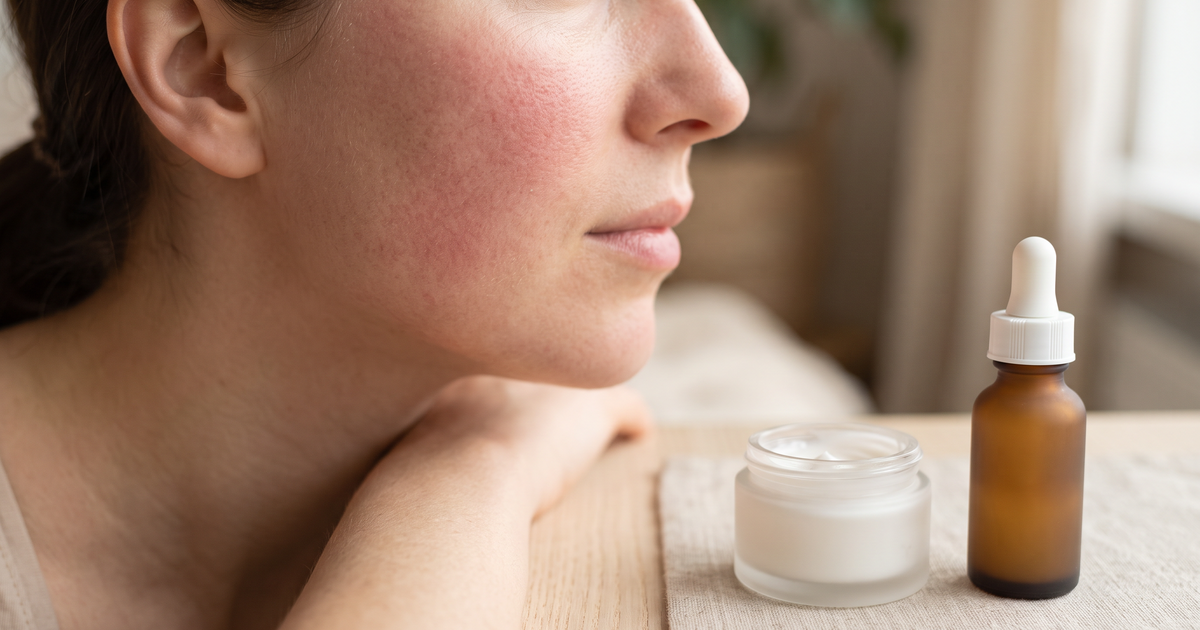
A photo shows color. Redness across the cheeks, around the nose, on the chin. It doesn't show whether that redness came from a hot shower ten minutes ago, a new product, or skin that's always that way. It also doesn't show the shopper who has no visible redness at all but stings from anything with fragrance.
That's why redness and sensitivity need two inputs. Read the scan's redness level as "what's visible right now" and the quiz as "what the shopper knows about their skin".
Lighting matters more here than for most concerns. Warm indoor light can make skin look redder; a cold screen glow can wash it out. Our photo tips for a usable skin scan are worth linking right above the camera button.
The quiz questions that matter
Keep it to one or two questions. More than that and people skip.
- "How does your skin usually react to new products?" Rarely / Sometimes stings or goes red / Often reacts.
- "Anything you avoid?" Fragrance / Strong acids / Retinol / None.
Wire "Often reacts" to exclude your exfoliating acids, retinoid-style serums and strong vitamin C. Wire each "avoid" answer to exclude the matching products. That's the whole safety layer, and it's more reliable than any photo reading. There are more examples in skincare quiz questions that actually help product matching, and you can build them in the quiz builder.
A sample redness mapping
Here's a starting map for a store with a gentle range. Product types are generic, not brand recommendations.
| Product type | Linked to | Levels | Quiz exclude |
|---|---|---|---|
| Mild cream cleanser | All concerns | Low, Medium, High | None |
| Calming serum (centella or panthenol type) | Redness | Low, Medium, High | Exclude if "avoid fragrance" and product contains fragrance |
| Niacinamide serum | Redness, Pores | Medium | Exclude if "often reacts" |
| Barrier cream | Redness, Dryness | Medium, High | None |
| Mineral sunscreen | All concerns | Low, Medium, High | None |
| Exfoliating toner | Pores | Medium, High | Exclude if "often reacts" or "avoid strong acids" |
| Retinoid-style night serum | Wrinkles | Medium, High | Exclude if "often reacts" or "avoid retinol" |
Notice the niacinamide serum sits at medium only. Some people with high redness do fine with it, some don't. Keeping it off the high list is a cautious default you can change once you've seen real results. The logic of AND conditions and OR excludes is explained in how AI skin analysis picks products.
Watch the other concerns too
Redness rarely shows up alone. A shopper might read high on acne and medium on redness, and your acne range is usually full of actives. That's exactly where excludes earn their keep. If you haven't mapped breakout products yet, acne skin analysis on your store walks through it.
The same goes for anti-aging. Retinoid-style products are the usual answer to wrinkle readings and the usual trigger for sensitive skin. See virtual skin scan for signs of aging for that side.
How the result should read
For a shopper with high redness who says their skin often reacts, I'd want the result to show four things: a gentle cleanser, one calming serum, a barrier cream and a mineral sunscreen. No acids, no retinoids, no "brightening" anything.
Add one plain line under the result, written by you: "If redness lasts, burns or keeps getting worse, it's worth seeing a dermatologist." It's honest, it protects the shopper and it protects your store.
Test it before shoppers do
- Take three test scans: one in daylight, one under warm indoor light, one after splashing the face with warm water.
- Answer the quiz as "often reacts" for each.
- Read the product list. If an acid toner or retinoid-style serum shows, an exclude is missing.
- Repeat with "rarely reacts" and check the list widens sensibly.
Plans
Scan, quiz builder and product recommendations are on every Shopify plan: Start $59, Plus $129, Growth $249 and Scale $499 a month, with a 7-day trial. AM/PM routines and history start on Plus. More on product recommendations from your catalog.
FAQ
Can an online skin scan detect sensitive skin? It reads visible redness. Sensitivity comes from the quiz, and the answer should exclude stronger products.
What should a shopper with high redness see? A short gentle routine: mild cleanser, calming serum, barrier cream, sunscreen.
Is a redness reading a medical result? No. Not a medical diagnosis; does not replace a dermatologist.
Which Face Age plan includes the quiz and recommendations? Every plan, from Start at $59.