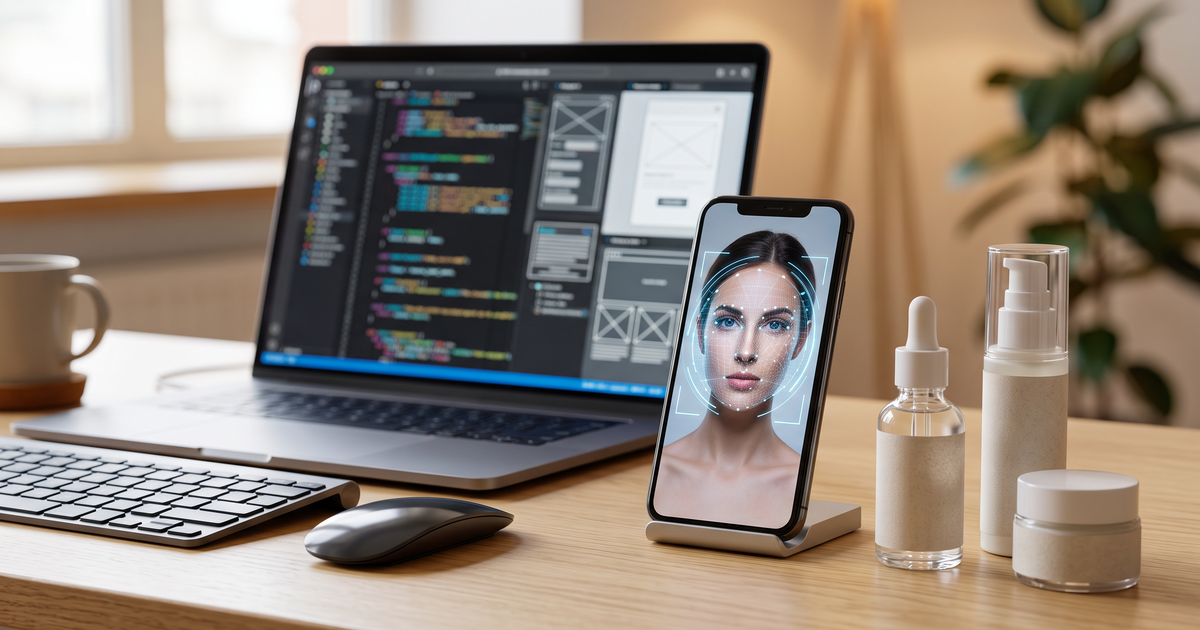
AI skin analysis for K-beauty stores works best when it trims a long routine down to the steps a shopper actually needs. Face Age reads 13 visible concerns from one photo, then shows products you've mapped to them, and on Plus and above builds AM and PM routines from those products. For a Korean skincare catalog with toners, essences, ampoules and creams, the job is deciding which category answers which concern.
K-beauty shoppers often arrive already knowing the vocabulary. They know what an essence is. What they don't know is which of your 14 essences fits them. That's where a scan earns its place, as long as the mapping behind it is tidy.
Key terms
- Layering: applying several light products in order, thinnest to thickest. The backbone of most Korean routines.
- Essence / ampoule: watery or concentrated targeted steps between toner and cream.
- Concern: a visible skin topic the scan reads, such as dryness, pores, redness, pigmentation or wrinkles.
- Severity level: low, medium or high per concern.
- Routine generator: Face Age's AM and PM routine builder, on Plus and above.
The scan is a cosmetic analysis for shopping guidance. Not a medical diagnosis; does not replace a dermatologist.
Why K-beauty catalogs are tricky to map
Two reasons. First, categories overlap. A "hydrating toner", a "first essence" and a "hyaluronic ampoule" can all claim dryness. Map all of them to dryness at every level and a shopper with mildly dry skin sees a wall of near-identical bottles.
Second, product descriptions are long and generous. Many Korean product pages list six benefits per bottle. If you use Automate AI (which links products to concerns from their names and descriptions) it will believe every one of them. That's fine as a first pass. It isn't fine as a final setup.
A category-to-concern map for a K-beauty store
Here's a starting point I'd use for a store with a typical range. The products are generic types, not brand recommendations.
| Step | Example product type | Concerns to link | Levels |
|---|---|---|---|
| Oil cleanser | Cleansing oil or balm | All concerns | Low, Medium, High |
| Toner | Hydrating toner | Dryness | Low, Medium |
| Toner | Exfoliating toner (mild acids) | Pores | Medium, High |
| Essence | Fermented or snail-type essence | Dryness | Medium, High |
| Ampoule / serum | Brightening ampoule | Pigmentation | Medium, High |
| Ampoule / serum | Centella-type calming serum | Redness | Low, Medium, High |
| Cream | Light gel cream | All concerns | Low |
| Cream | Barrier cream | Dryness, Redness | Medium, High |
| Sunscreen | Daily SPF | All concerns | Low, Medium, High |
| Extra | Sheet mask | One concern each | Medium, High |
A few notes on that table.
The cleanser and sunscreen go to everyone. That way no routine comes back without the first and last steps.
Only one product per step should usually match. If two hydrating toners both match low dryness, pick the one you'd hand a friend and narrow the other to medium.
Exfoliating toners need an exclude. Add a quiz question about sensitivity and wire "very sensitive" to exclude acid toners. A photo can't see a past reaction. Our post on quiz questions that help product matching has more examples, and the logic behind includes and excludes is in how AI skin analysis picks products.
Keep the routine short
The "10-step routine" is great marketing and a hard sell to a new customer. I'd aim for three to five steps on the first recommendation: cleanser, one targeted step, cream, and sunscreen in the morning. A shopper who likes the result will come back for the essence and the mask.
On Plus at $129 a month, the routine generator splits mapped products into AM and PM. That's where your mapping shows. A brightening ampoule tends to land in the morning slot, a richer cream at night. If your mapping is loose, both routines get crowded. There's a longer walkthrough in AI skincare routine generator: AM and PM routines from one scan.
Serums, ampoules and pigment
Brightening is a big part of most K-beauty ranges, and it's also the category where over-mapping hurts most. Keep brightening ampoules to medium and high pigmentation, and let low readings get the basics plus sunscreen. For a deeper look at this one category, see dark spots and pigment after a skin scan and skin scan serum recommendations.
Language and international shoppers
A lot of K-beauty stores sell across borders. Face Age shows the analysis in the store's language, so if you run a store in several languages the result follows. Product names are whatever your catalog says. If you sell in more than one market, read multilingual skin analysis for international beauty stores for the setup details.
A setup checklist
- Run Automate AI on the whole catalog to get a first draft of links.
- Sort products by step (cleanser, toner, essence, ampoule, cream, SPF, mask).
- For each step, make sure only one or two products match any concern at any level.
- Map one cleanser, one basic cream and one sunscreen to all concerns at every level.
- Add a sensitivity question and exclude stronger actives for "very sensitive".
- Take five test scans with different skin and read each routine out loud. If it sounds like a shelf, not advice, tighten levels.
- Re-check every time you add a product line. New launches that aren't mapped never show after a scan.
Plans
Scan, quiz and product recommendations are on every Shopify plan: Start $59, Plus $129, Growth $249 and Scale $499 a month, with a 7-day trial. Routines, history and PDF reports start on Plus. More on product recommendations from your catalog.
FAQ
Can AI skin analysis recommend a Korean skincare routine? Yes, from the products you stock and map. Routines start on Plus.
How many steps should a recommended K-beauty routine have? Three to five for a first routine. Shoppers can add steps later.
Should sheet masks appear after a scan? As an extra, mapped to one concern at medium or high.
Is the scan a medical result? No. Not a medical diagnosis; does not replace a dermatologist.