"AI agent" is the label of the year, and a lot of quiz vendors now use it. It's worth separating the hype from what the shopper actually sees on the screen.
Key terms
- AI agent (in a quiz): a conversational assistant, usually powered by a large language model, that decides what to ask next and what to recommend.
- Structured quiz: a fixed set of screens with set answers, optionally with logic that hides or shows screens.
- Scan-based quiz: a structured quiz that includes a photo step where the skin is analyzed.
- Rule-based matching: products shown because they're linked to specific answers or scan readings, not because a model chose them on the fly.
How a skincare quiz AI agent works
The shopper types "my skin gets oily by lunch but my cheeks flake". The agent reads that, asks a follow-up ("does anything sting when you apply it?") and then recommends products, often with a short reason.
What's good about it:
- Shoppers can describe things in their own words, including things your quiz never thought to ask.
- Follow-up questions adapt to the answer, so a simple case can be quick.
- It can answer side questions ("can I use this with my retinol?") in the same place.
What's harder:
- Consistency. Two shoppers with the same answers can get different picks, because the model writes each reply fresh. That's hard to test and hard to explain to your team.
- Claims. A language model may describe a product in ways your copy never did, or drift into medical-sounding advice. You need guardrails and someone checking transcripts.
- Data shape. Free text is messy to turn into segments. "Kinda sensitive sometimes" doesn't map cleanly to a Klaviyo property.
- No photo by default. Most chat agents work from what the shopper says. People describe their skin less accurately than they think.
How a scan-based quiz works
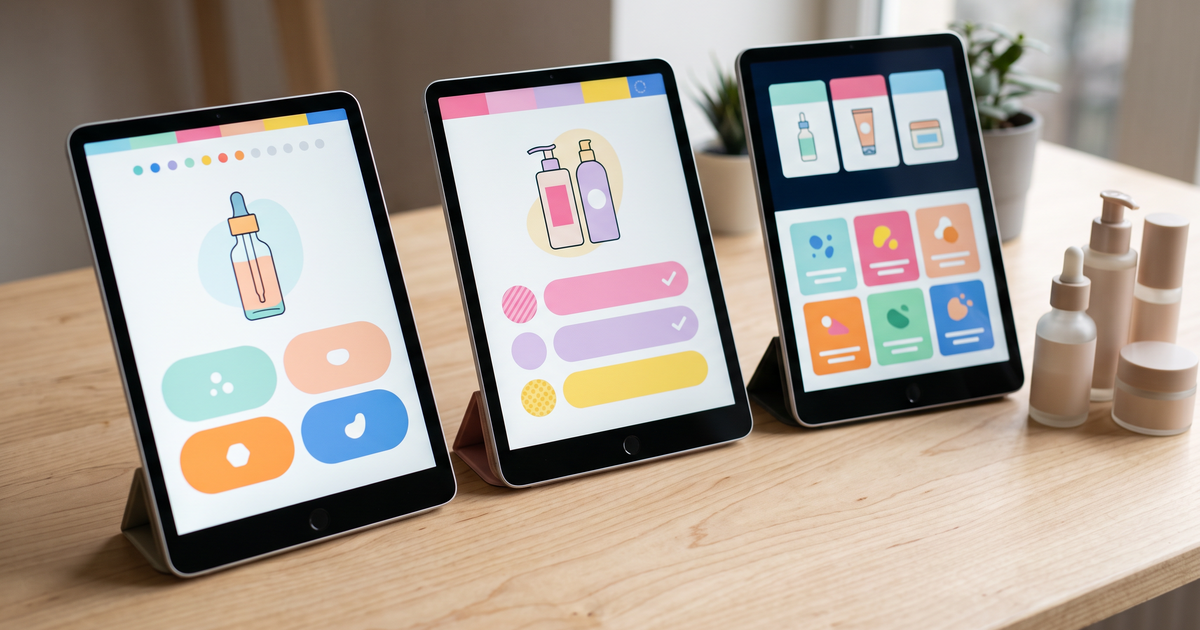
In Face Age, you build the quiz in the Quiz Builder: sections with Select or Multi Select questions, an optional Email element and hide conditions that skip screens when an earlier answer makes them irrelevant. The last section is the Skin Analyzer, which you can't remove.
The shopper answers a few questions and takes one photo. The analysis reads 13 visible concerns across 250+ attributes and assigns low, medium or high to each, plus a Skin Age estimate. Not a medical diagnosis; does not replace a dermatologist.
Products then show by rules you set: each one linked to concerns and severity levels, with quiz answers able to include or exclude products. Excludes always win. If a shopper says their skin is very sensitive and you've excluded a strong exfoliant for that answer, it won't show. Every time.
You can see the builder on the quiz feature page. For question ideas, our post on skincare quiz questions that help product matching is a good start.
Side by side
| Chat-style AI agent | Scan-based structured quiz (Face Age) | |
|---|---|---|
| Input | Free text | Set answers plus one photo |
| Same inputs, same result? | Not guaranteed | Yes, rules-based |
| Who decides the products | The model, within whatever limits you set | Your mappings and excludes |
| Sees the skin | Usually no | Yes, visible concerns from the photo |
| Data for email | Needs parsing | Skin-concern tags in Shopify Customers; Klaviyo or Mailchimp on Plus+ |
| Risk to manage | Off-script claims, inconsistency | Loose mapping that shows too many products |
Where the agent wins
If your catalog is small and your shoppers ask lots of "how do I use this" questions, a chat assistant can be a good help desk. It's also handy when product choice depends on things a photo can't show at all, like fragrance preference or which products someone already owns.
Where the scan-based quiz wins
If you want every recommendation to be defensible, rules beat a model's judgment. You can open the mapping and say exactly why a shopper saw a product. Your team can test it. Your email flows can rely on clean tags, because "dryness: high" is the same string every time.
The photo also catches what people don't say. A shopper who calls their skin "normal" may still show visible dryness or redness in the result. That gives your recommendations something to stand on besides self-description. The broader trade-off between questions and a photo is covered in skin quiz vs AI skin analyzer.
Can you run both?
Yes, and for some stores that's the sensible setup. Use the scan-based quiz as the main "find my routine" path, with clean data and predictable products. Keep a chat assistant for after-sale questions like layering, order of steps and shipping. Just don't let the chat assistant recommend different products from the quiz for the same shopper, or you'll get "your quiz said X, your bot said Y" emails.
Setting up the scan-based route in a day
If you go the structured way, the first version doesn't need to be perfect. Write four questions: how skin feels by evening, anything it doesn't tolerate, routine length and main goal. Add a hide condition so the tolerance follow-up only appears after a "yes". Map your top products with tight severity levels and wire the tolerance answer to excludes on strong actives. Then take the quiz yourself on your phone, three or four times with different answers, and check the product list each time. That one afternoon of testing tells you more than any vendor demo.
Questions to ask any AI agent vendor
- Can I see and export every conversation?
- Can I restrict recommendations to products I approve, and block specific claims?
- What happens when a shopper asks about a skin condition, medication or pregnancy?
- How do answers reach Shopify customer records or my email tool, and in what format?
- If two shoppers give the same answers, will they see the same products?
If a vendor can't answer number five plainly, plan for a lot of transcript reading.
Pricing note
Face Age's Quiz Builder, scan and recommendations are on every Shopify plan: Start $59, Plus $129, Growth $249, Scale $499 a month, with a 7-day trial. Klaviyo and Mailchimp sync start on Plus. See pricing.
FAQ
What is a skincare quiz AI agent? A chat assistant, usually built on a language model, that asks about skin in conversation and suggests products.
Is an AI agent better than a structured skincare quiz? It's better at open questions and worse at consistency. Structured quizzes with a scan are easier to check and reuse.
Does Face Age have a chat agent? No. It uses a structured Quiz Builder with a photo analysis and rule-based matching.
Can an AI agent give medical advice about skin? It shouldn't. Not a medical diagnosis; does not replace a dermatologist.