Comparing virtual vs in-store beauty consultations, the honest answer is that neither wins outright. A virtual consultation, usually a selfie skin scan plus a short quiz, is available around the clock, costs little per shopper and leaves a record you can build on. An in-store consultation gives you touch, texture swatches, product trial and a person who can read body language and ask a better follow-up question. The interesting shift is that one AI skin scan can sit inside both: the same analysis on your website and on a tablet at the counter, so the customer's skin profile travels with them. That's where most stores should be heading.
Here's how the two compare on the things that matter to a skincare business.
What each type of consultation is
Virtual consultation. The shopper takes a photo on their phone, answers a few questions, and gets a breakdown of visible concerns, recommended products and often a routine. No appointment. It's usually free to the shopper and runs on your site. Our guide to virtual skin consultations for online stores covers the online setup in detail.
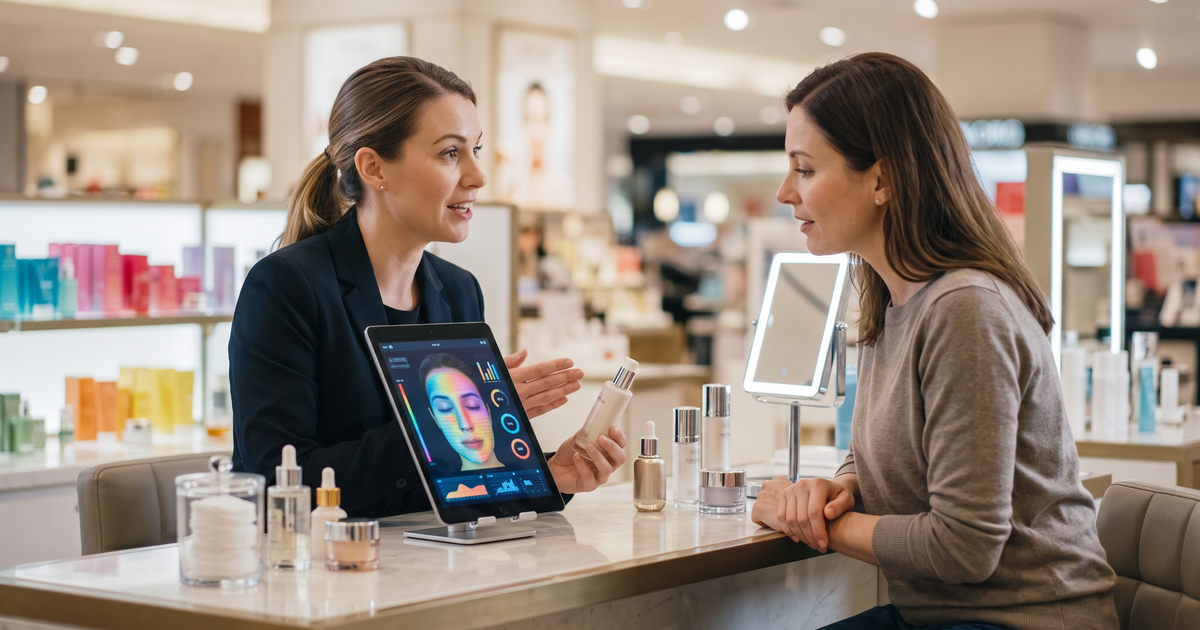
In-store consultation. A beauty advisor talks with the customer at the counter, looks at their skin, asks about their routine and suggests products, often with testers. Quality depends heavily on who's working that day.
Virtual vs in-store beauty consultations, side by side
| Virtual (scan + quiz) | In-store (advisor) | |
|---|---|---|
| Availability | Any time, any device | Opening hours, staff on shift |
| Consistency | Same method every time | Varies by advisor and how busy the floor is |
| Cost per consultation | Low once set up | Staff time per customer |
| Texture, scent, trying products | No | Yes |
| Reading of the person | Only what the photo and quiz show | Body language, follow-up questions, rapport |
| Record afterwards | Saved result, history, PDF | Usually nothing, unless the advisor notes it |
| Best for | Discovery, first routine, repeat check-ins | Hesitant buyers, premium purchases, complex routines |
Neither column is "better". They do different jobs.
Where virtual consultations win
Reach and timing. Most skincare browsing happens on a phone, often late in the evening. A virtual consultation is there when the shopper is. No one has to be on shift.
Consistency. Every shopper gets the same analysis method. A new advisor in week one and a veteran in year five might give two different answers to the same face. A scan doesn't drift with mood or fatigue.
A record. With analysis history on, each consultation is saved. Next time, the shopper can rescan and compare. In-store advice usually evaporates once the customer leaves.
Low pressure. Some people just don't want to be approached in a shop. A scan lets them explore without feeling sold to.
The limits are real too. A photo can't feel skin. It can't smell a product or test a texture on the hand. And it reads only visible signs. Not a medical diagnosis; does not replace a dermatologist.
Where in-store consultations win
Touch and trial. Texture is a big part of whether someone sticks with a moisturizer. No screen replaces a swatch on the back of the hand.
Better follow-up questions. A good advisor hears "my skin's fine, I guess" and knows to dig. A quiz only asks what it's built to ask.
Confidence for big purchases. A shopper spending on a premium routine often wants a person to say "yes, this suits you."
The weakness is consistency and scale. On a busy Saturday, the consultation shrinks to thirty seconds. And there's usually no record, so the next visit starts from zero.
The broader question of what software does well versus what people do well is covered in our piece on AI beauty consultants vs human beauty consultants.
What a skin scan changes in each channel
Online
The scan turns a static product catalog into a guided consultation. With Face Age, a shopper's photo is analyzed for 13 skin concerns, products are matched from your own range by concern and severity, and on Plus and above they get an AM and PM routine. Quiz questions fill in what the photo can't show, like sensitivity or how many steps someone wants. You can try the flow on the Face Age demo.
In store
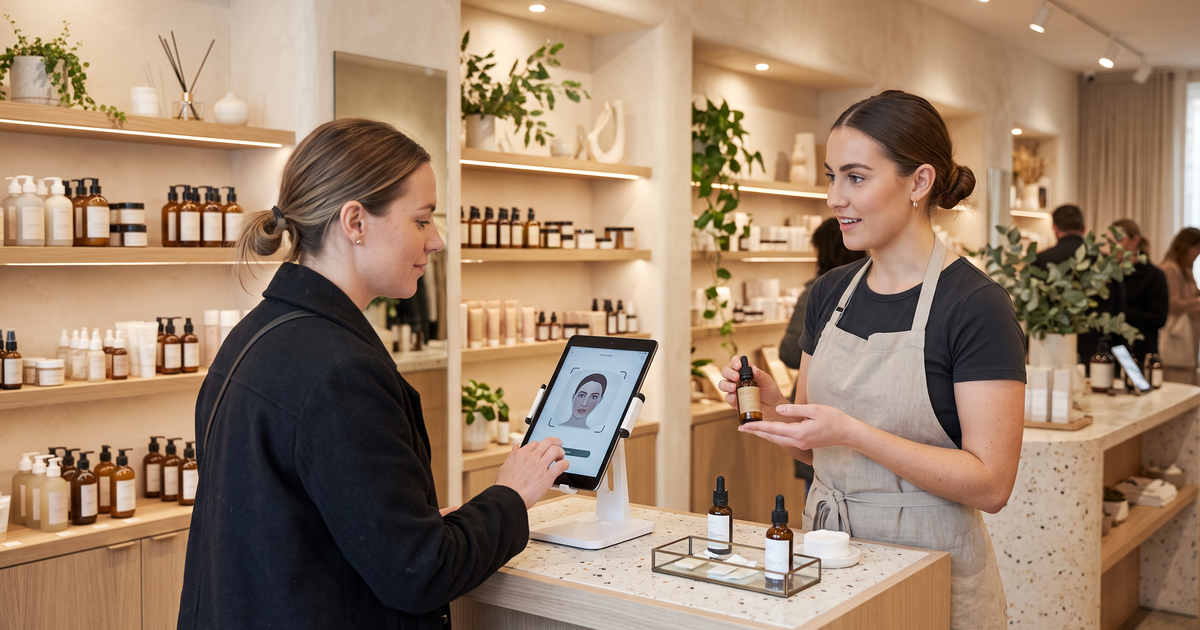
The same scan on a store tablet gives the advisor a starting point. Instead of "what's your skin type?", the conversation starts with "the scan's picking up some redness on the cheeks and a bit of oiliness. How does that match what you notice?" That's a better opening. The advisor still does the human part: testers, texture, judgment.
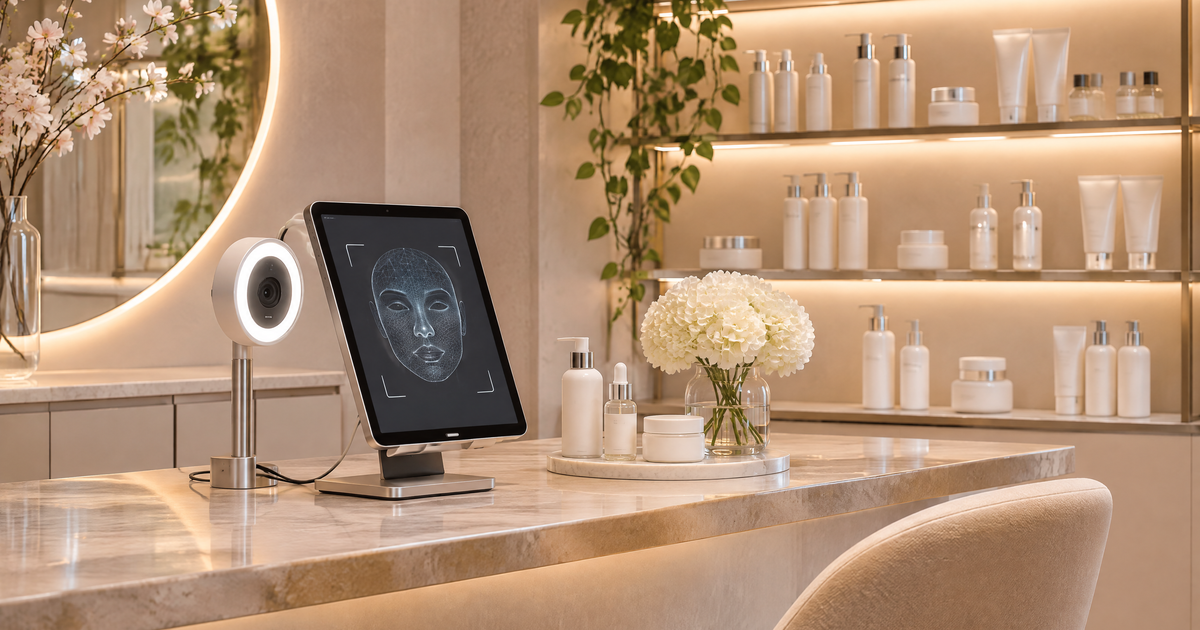
Face Age runs in a browser, so a tablet at the counter can open the same scan page your website uses, with no separate device to buy. Practical setup notes are in running an online skin scan in store and online.
Between the two
This is the part most stores miss. If the in-store scan is saved against the customer's email or account, it's there when they get home. They can open their routine online, download a PDF, and rescan from their phone in two months. If they scanned online first and log in on the store tablet, their earlier scans are there to compare. One profile, two channels. We go deeper on this in omnichannel AI skin analysis.
How to choose for your store
- Online only? Lead with a virtual consultation. Add a short quiz and routines. That's your counter.
- A few physical doors and a website? Run the same scan in both, saved to one profile. Train advisors to use the result as an opening, not a script.
- Premium or high-touch brand? Keep the advisor central in store, and use the scan online so the experience doesn't stop when the shop closes.
A small training note for in-store teams: tell advisors never to read the scan as a verdict. It's a cosmetic analysis of a photo. Their job is to listen, test, and use the result as one input.
For where this is heading more broadly, see latest trends in skin analysis technology, or the AI skin analysis feature page for what the scan reads.
Costs to plan for
A virtual consultation costs the tool subscription and some setup time for product mapping. On the Shopify App Store, Face Age is Start $59, Plus $129, Growth $249 and Scale $499 a month, each with a 7-day free trial; routines, history and PDF reports start on Plus. An in-store consultation costs advisor time on every customer, plus training. Face Age doesn't sell separate in-store hardware; the scan page opens in the browser of a tablet you already own.
FAQ
Are virtual beauty consultations as good as in-store ones? They're good at different things: virtual for availability, consistency and records; in-store for touch, trial and human judgment.
How does a skin scan help an in-store consultation? It gives the advisor a consistent starting point with concern readings, matched products and a routine.
Do I need special hardware for an in-store skin scan? Not with Face Age. It runs in a browser on a tablet or phone.
Is a virtual skin consultation a medical consultation? No. Not a medical diagnosis; does not replace a dermatologist.