AI in the skincare market is changing four things for online beauty stores: shoppers can get a skin reading from a selfie instead of guessing their skin type, product lists can be matched to what that reading shows, routines can be built and updated automatically, and more people are finding products by asking AI assistants instead of typing keywords. The first three are now available as off-the-shelf apps. The fourth changes how you write your product pages.
You'll see big market-size numbers quoted for AI in skincare and for personalized skincare generally. Estimates vary a lot between research firms because they define the market differently, and none of them tells you what to do on your store next month. So this piece skips the forecasts and looks at what's in use, what's working in practice, and what you can safely ignore for now.
1. Skin analysis moved from the counter to the phone
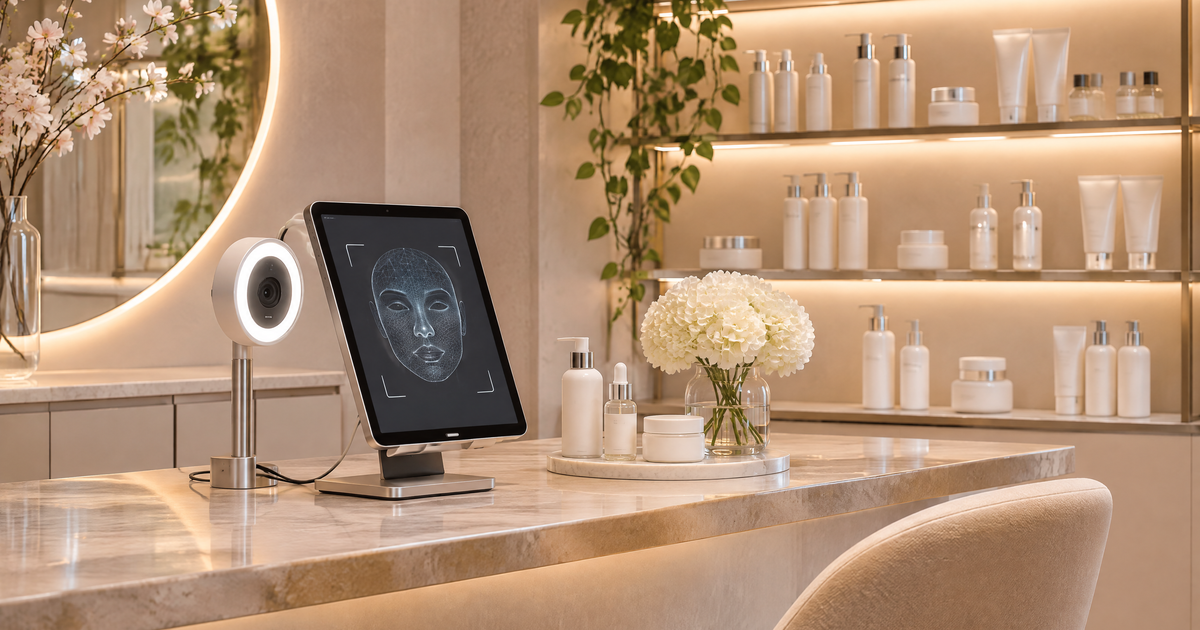
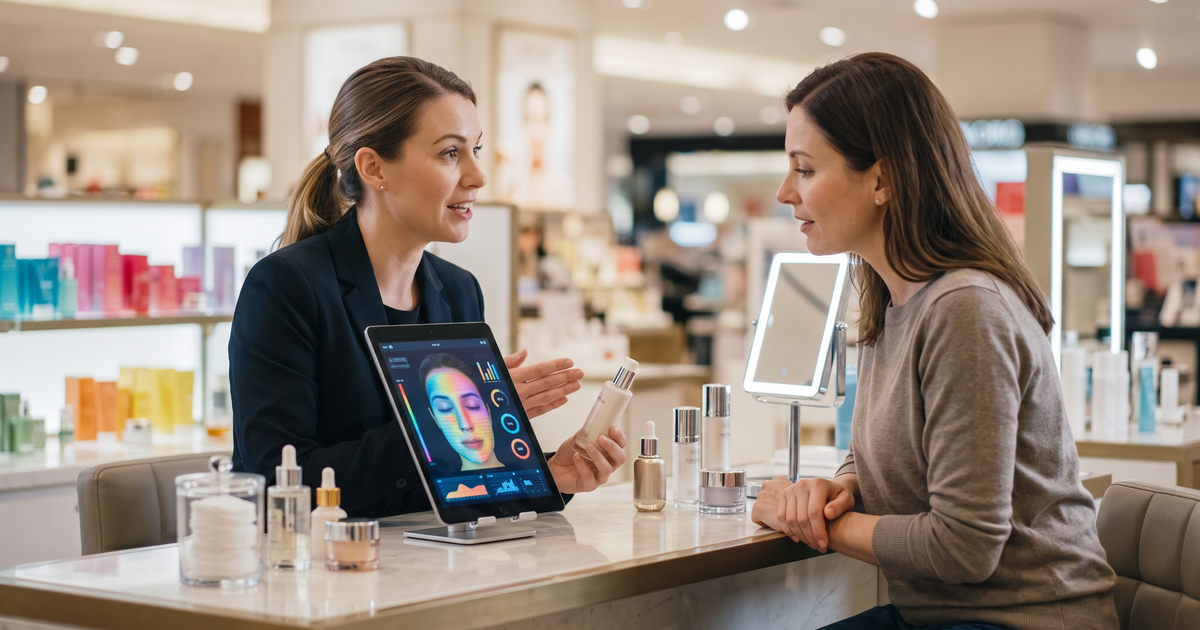
Not long ago, a proper skin reading meant a device on a beauty counter with controlled lighting. That still exists, but the bigger shift is browser-based skin analysis: the shopper takes a selfie on their own phone and gets a reading of visible concerns in seconds, with no app download.
For an online store, that solves an old problem. Shoppers are bad at guessing their own skin type, and "combination skin" filters in a collection sidebar rely on a guess. A scan gives you something concrete to match products against. Face Age, for example, reads 13 visible concerns across 250+ attributes from one photo, then recommends products from the store's own catalog.
What hasn't changed: a photo shows the surface. It can't measure how skin reacts or what's happening below it. These tools are cosmetic. Not a medical diagnosis; does not replace a dermatologist. Stores that say so plainly tend to get more trust, not less. How skin analysis technology works in a retail beauty setting covers the mechanics.
2. Recommendations got more specific, and more editable
Old-style recommendation engines in ecommerce worked from behaviour: people who bought this also bought that. That's fine for upsells, but it says nothing about whether a serum suits this shopper's skin.
The newer approach starts from the shopper. The scan and a short quiz produce a profile, and product rules decide what fits. The part I'd pay attention to as a store owner is editability. Good tools let your team see why each product was suggested and change the rules: which concerns a product is for, at what severity, and when it should be excluded, for instance strong actives for skin the shopper says reacts easily.
That's a real change in who controls merchandising. It's no longer a black box run by an algorithm; it's a set of rules your team owns and adjusts weekly.
3. Routines replaced single products
Skincare is sold as products but used as routines. AI tools are closing that gap. From one scan, a store can now show a morning and night routine in a sensible order, built from its own products, and update it when the shopper scans again weeks later.
Two related shifts:
- Adaptive routines. With scan history, a routine can change as visible concerns change, instead of staying fixed forever. Adaptive skincare with AI looks at how often that should actually happen.
- Longer-term tracking. Comparing two scans side by side gives returning shoppers a reason to come back. Brands talk about "skin longevity" here; skin longevity tools for beauty brands separates the useful parts from the marketing.
4. AI assistants are becoming a shopping channel
This is the shift most skincare stores haven't caught up with. Shoppers increasingly ask ChatGPT, Gemini, Perplexity or Google's AI answers things like "what's a gentle serum for redness under $40?" and get a short list with sources.
What gets cited tends to be pages that answer the question directly, with clear facts: what the product is for, key ingredients, who it suits and who should avoid it, price. Vague brand copy ("a luxurious ritual for radiant skin") gives an assistant nothing to quote.
Practical changes worth making now:
- Start product pages with one plain sentence on what the product does and for whom.
- Add a short FAQ to your top product and collection pages.
- Keep prices and availability consistent everywhere they appear.
- Write blog content that answers real questions, not just keywords.
We went through this in detail in how AI assistants change beauty product search.
5. AI consultants work best next to people
Chat-based "AI beauty advisors" are everywhere. Some are good. Many are a general chatbot with a product feed attached, and they can confidently recommend things that don't suit the shopper.
The setups that work keep AI on the parts it does well: reading the photo consistently, applying product rules the same way every time, being available at 2am. People handle the parts that need judgment: an unusual question, a shopper who's had a bad reaction, anything that should go to a dermatologist. AI beauty consultant vs human beauty consultant is a fair look at that split.
What to be careful with
Not everything labelled AI is worth your money or your shoppers' trust.
Medical framing. Tools that talk about skin in medical terms set expectations a cosmetic tool can't meet. Keep your language to visible appearance and shopping guidance.
Result promises. Before-and-after simulations and "see your skin in 8 weeks" previews can be useful for discovery, but showing results a product may not deliver is a fast way to lose credibility.
Data you don't need. Ask every vendor where the selfie goes and what's kept. If you don't need scan history, don't store photos. If you do, know who controls deletion.
Custom builds for small catalogs. Training your own model or building a chatbot from scratch rarely makes sense for a store with a few dozen products. Off-the-shelf tools have caught up.
What AI in the skincare market means for your store, practically
If you run an online skincare store and want to act on this without a big project:
- Add a skin scan with product matching to one page, such as a "Find my routine" page, and map your best sellers first.
- Add two or three quiz questions for what the camera can't see.
- Rewrite the opening line of your top ten product pages so an AI assistant could quote it.
- Turn on scan history if you want returning shoppers to compare progress, and decide your privacy settings before you do.
- Review what shoppers add to cart after a scan every week and adjust the rules.
On Shopify, Face Age covers steps 1, 2 and 4, with a 7-day free trial on every plan (Start $59, Plus $129, Growth $249, Scale $499 a month). The skincare brands solution page shows how it fits a skincare store, and our latest trends in skin analysis technology post goes deeper on the technology side.
FAQ
How is AI used in the skincare market?
Mainly for skin analysis from selfies, product matching, routine building and AI-assisted search, plus research and formulation behind the scenes.
How big is the AI skincare market?
Estimates vary widely by research firm and definition. For a store, which tools solve your problems matters more than any forecast.
Do small skincare stores need AI?
Not for everything, but a skin scan with product matching is now affordable as a Shopify app.
Is AI skin analysis a medical tool?
No. Not a medical diagnosis; does not replace a dermatologist.