
AI personalization helps customer retention in beauty when it remembers the customer's skin, not just their cart. In practice that means four things: capture a skin profile on the first visit, keep it, invite people back to rescan when it makes sense, and let the routine, emails and product suggestions change when the readings change. A brand that does this gives customers a reason to return that has nothing to do with a discount code. A brand that skips it ends up sending "you might also like" emails based on one order from six months ago.
This playbook is for skincare and beauty stores that already have, or are about to add, an AI skin scan. It's about what to do after the first result.
Why most beauty retention is order-based, and why that's weak
The default retention stack in ecommerce runs on purchase data. Someone buys a vitamin C serum, so they get a replenishment email in 45 days and a cross-sell for a moisturizer. That's not useless. It's just blind.
It doesn't know their skin got drier over winter. It doesn't know they bought the serum for pigment and now pigment reads lower. And it keeps pushing the same category forever.
Skin-based personalization fixes the blindness. The data is different in kind: what the customer's skin looks like now, what changed, and what they told you in a quiz. That's the raw material for follow-ups that feel like advice.
What data a skin scan gives you to work with
From one Face Age scan you get:
- Concern readings with severity. 13 concerns, each with a level the store can act on, like pigment medium or redness low.
- Skin Age, a shopper-friendly summary.
- Quiz answers, such as sensitivity, routine length or ingredients to avoid.
- The products and routine the shopper was shown.
With analysis history on, you also get the change over time. That last part is what makes retention work. All of this is a cosmetic read of visible skin. Not a medical diagnosis; does not replace a dermatologist.
Before you collect more, decide what you'll actually use. Our guide to zero-party data from a skin scan and quiz has a short list of fields worth keeping and a few worth skipping.
AI personalization for customer retention, step by step
1. Make the first result worth saving
If the first scan is anonymous and disappears when the tab closes, there's nothing to come back to. Give shoppers a reason to save it:
- A branded PDF report they can download (Plus and above).
- An email copy of their routine.
- A logged-in account that keeps their history.
Ask for the email at the moment of value, right after results appear, not before the scan. "Email me my routine" converts curiosity into a profile far more naturally than a gate.
2. Store history properly
Turn on analysis history and choose Server API or Both as the storage mode. Browser-only history lives on one device, which breaks the moment someone switches phones. Server storage needs a logged-in customer or an email. Mention it in your privacy policy. The scan history feature shows the options.
3. Send emails by concern, not by SKU
Push scan results into your email tool so segments reflect skin, not just orders. Practical segments that work:
- Shoppers whose top concern is pigment, regardless of what they bought.
- Shoppers who said their skin is reactive.
- Shoppers whose last scan was more than eight weeks ago.
Each segment gets different content. Pigment shoppers hear about daily sunscreen and how brightening products are used. Reactive-skin shoppers get patch-testing advice and gentler launches. The setup is covered in Klaviyo skincare segmentation from AI skin analysis results, and if you're on Mailchimp, see Mailchimp flows from AI skin analysis results.
4. Invite a rescan at natural moments
The rescan is the retention moment. Good triggers:
- Before replenishment. "Running low? Take a quick scan before you reorder. Your routine might need a tweak."
- Seasonal change. Start of winter, start of summer.
- After a routine has had time. Eight to twelve weeks after the first routine purchase.
Don't ask weekly. Frequent rescans show noise more than change, and people tire of it.
5. Show what changed, honestly
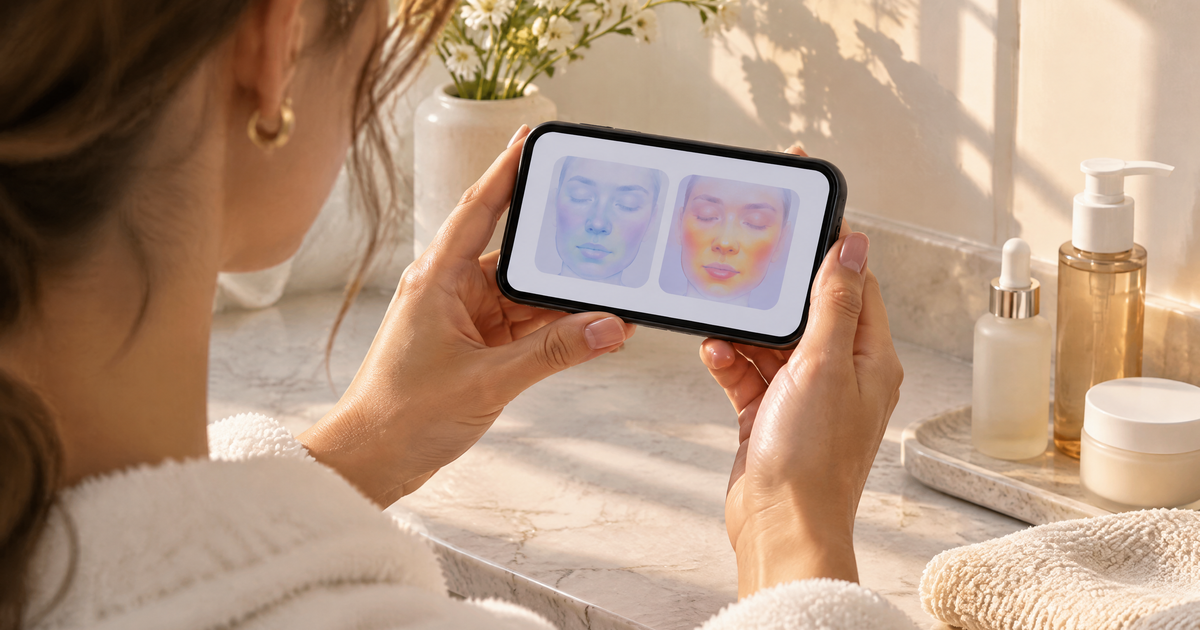
When a customer rescans, the Compare tab shows the earlier scan and the new one side by side, with each concern tagged Improved, Regressed or Stable. That's the most engaging screen in the whole flow. People like seeing a record of their own skin.
Write the follow-up copy carefully. "Your redness reads lower than in September" is honest. "Our serum reduced your redness" is a claim you can't support from two photos. See the before-and-after comparison feature for how it looks to shoppers.
6. Update the routine automatically
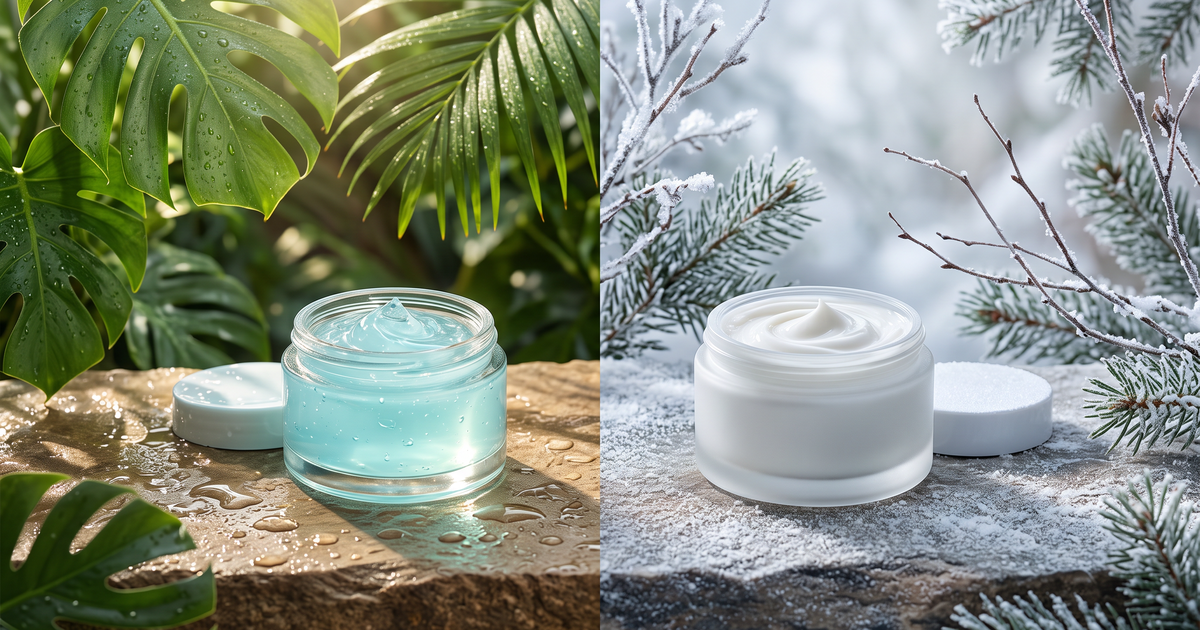
If products are mapped by concern and severity, the new scan produces new matches without anyone editing the catalog. A shopper whose pigment moved from medium to low sees a gentler brightening step. One whose skin got drier over winter sees a richer moisturizer. That small change is what makes the brand feel like it's paying attention.
For bigger baskets, group the updated routine into a set. Our guide to personalized skincare bundles from skin scan results shows how to structure them without discounting everything.
What not to do
- Don't make every touchpoint a sale. A "your skin this season" email with no product block builds more trust than another promo.
- Don't over-personalize the subject line. "Your pigment is back" feels invasive. Keep skin details inside the email, where context helps.
- Don't promise results. No before-and-after claims tied to a product.
- Don't keep data you don't use. Store what feeds a segment or a routine. Drop the rest.
How to tell if it's working
Use your own numbers, not industry averages. In the Face Age dashboard you can see analyses run, products added to cart after an analysis and products viewed, and orders placed after an analysis are tagged in Shopify. Pair that with your email tool's reports:
- How many customers rescan at least once?
- Do rescanners place a second order more often than non-scanners?
- Which concern segments open and click the most?
If rescans are rare, the problem is usually the invitation, not the tool. Move the rescan prompt into the replenishment email and the account page.
What it costs
On the Shopify App Store, Face Age's retention features (history, comparison, routines, PDF reports and email integrations) start on Plus at $129 a month. Start is $59, Growth $249 and Scale $499, each with a 7-day free trial. The full feature-by-feature flow for returning customers is in our returning-shopper playbook.
FAQ
How should beauty brands use AI personalization to improve customer retention? Capture a skin profile, store it, invite rescans at natural moments, update routines when readings change, and segment email by concern.
What data does a skin scan give a retention program? Concern readings with severity, Skin Age, quiz answers, matched products and routine, and change between scans.
Which Face Age features support retention? History, comparison, routines, PDF reports and email integrations, on Plus and above.
Can a scan prove a product worked? No. It shows a visible reading changed between two photos, not why. Not a medical diagnosis; does not replace a dermatologist.